


Some of the most memorable experiences are the ones that allow people to become part of something rather than simply observe it.
A large-scale sculptural installation at a music festival, an immersive brand activation, a custom-built environment for a product launch, or an interactive attraction can transform an ordinary space into something people want to explore, photograph, and remember.
Behind many of these experiences is a specialized form of manufacturing known as experiential fabrication.
Experiential fabrication brings creative concepts into the physical world through custom-built structures, scenic elements, sculptural features, interactive components, and immersive environments. It combines design, technology, materials, and craftsmanship to create physical experiences that connect people with brands, events, and ideas.
As businesses and event producers look for more engaging ways to reach audiences, custom fabrication has become an important part of creating experiences that stand out.
What Is Experiential Fabrication?
Experiential fabrication is the process of designing and manufacturing custom physical elements that help create an interactive, immersive, or memorable experience.
Unlike traditional displays that primarily present information or products, experiential installations are often designed to encourage participation, exploration, and emotional connection.
They may invite visitors to walk through an environment, interact with a structure, experience a visual spectacle, or become part of a branded setting.
Experiential fabrication can include:
- Large-scale scenic structures and installations
- Custom brand activation environments
- Immersive themed spaces
- Interactive displays and physical features
- Sculptural installations and oversized props
- Festival and live-event scenic elements
- Custom stages and decorative stage features
- Product launch installations
- Specialty architectural features
- Themed attractions and entertainment environments
- Custom photo opportunities and branded backdrops
Some projects are temporary installations created for a single event. Others are designed for extended use in permanent attractions, entertainment venues, or commercial environments.
The defining characteristic is that the fabricated elements contribute to an experience rather than simply occupying a space.
Where Is Experiential Fabrication Used?
Experiential fabrication supports a wide range of industries, from live entertainment and hospitality to corporate marketing and immersive attractions.
Music Festivals and Live Events
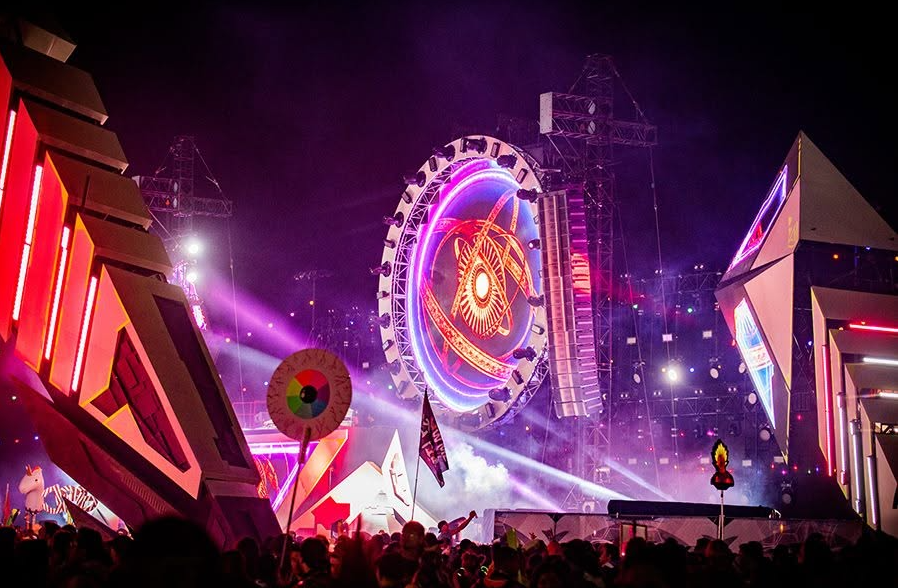
Music festivals and live events often use large-scale scenic features to create recognizable environments and establish the visual identity of an event.
These may include custom stage elements, decorative structures, sculptural installations, oversized props, branded features, and themed environments.
At large festivals, scenic fabrication can become an essential part of the overall visual experience. Structures and installations help establish the atmosphere of the event and give attendees something memorable to discover.
These projects can involve unusual shapes, large dimensions, specialized materials, and challenging production schedules.
Brand Activations
Brand activations are designed to create direct interactions between a brand and its audience.
Rather than relying exclusively on traditional advertising, companies use physical environments and custom installations to give people an opportunity to engage with a product, message, or identity.
Fabricated elements may include branded structures, oversized product replicas, interactive displays, custom props, specialty backdrops, and immersive presentation spaces.
A well-executed activation gives visitors something tangible to experience and creates opportunities for memorable photographs, social sharing, and meaningful brand interaction.
Product Launches
A product launch is an opportunity to introduce something new in a way that captures attention.
Custom fabrication can help turn a product presentation into a complete visual experience.
Examples include oversized product replicas, custom display platforms, branded architectural features, sculptural installations, specialty props, and presentation structures.
These elements can be designed to emphasize a product’s shape, features, purpose, or identity while creating an environment that supports the launch.
Immersive Attractions
Immersive attractions invite visitors into environments that are designed around a particular story, theme, or experience.
These may include themed entertainment spaces, interactive environments, walk-through installations, specialty attractions, and custom scenic features.
Fabrication can involve large sculptural forms, themed architectural elements, decorative structures, dimensional surfaces, and specialty props.
The goal is to create physical surroundings that support the intended atmosphere and help visitors feel connected to the environment.
Corporate Events and Experiences
Companies increasingly use custom-built environments for conferences, conventions, celebrations, customer events, and internal presentations.
These projects may include branded scenic structures, custom stages, presentation backdrops, interactive displays, specialty furniture, and large-scale visual features.
Custom fabrication helps transform an ordinary event venue into a space that reflects the company’s identity and the purpose of the event.
Hospitality and Entertainment
Restaurants, nightclubs, hotels, and entertainment venues can use experiential elements to create distinctive guest experiences.
Custom sculptures, themed installations, specialty architectural features, interactive components, and large decorative elements can become focal points within a venue.
These installations may be permanent or designed around a specific event, promotion, or seasonal experience.
Common Types of Experiential Fabrication
Experiential projects vary considerably, but many rely on a similar collection of fabricated elements.
Scenic Structures
Scenic structures help establish the physical setting for an event or experience.
They may include custom walls, platforms, architectural features, decorative structures, stage elements, and themed environments.
Unlike conventional construction components, scenic structures are often developed around a specific visual concept and may incorporate unusual shapes, materials, and finishes.
Large-Scale Sculptures and Props
Sculptures and oversized props can become defining features of an experience.
A large custom-built object can create a focal point, communicate a theme, or provide an engaging photo opportunity.
These elements may be manufactured using foam, fiberglass, metal, plastics, wood, or a combination of materials.
CNC foam carving and robotic cutting can be particularly useful for producing large and complex sculptural forms.
Immersive Environments
Immersive environments use physical elements to surround visitors with a particular visual identity or theme.
These spaces may incorporate custom architectural features, dimensional surfaces, specialty structures, sculptural components, and decorative elements.
The fabrication must support the overall concept while accounting for how visitors move through and interact with the environment.
Interactive Installations
Interactive installations encourage visitors to engage directly with physical features.
Depending on the project, this might involve moving components, hands-on displays, custom-built interfaces, interactive props, or structures designed around a specific activity.
Projects that incorporate electronics, sensors, lighting, motion, or other technical systems may require coordination with specialized technology providers.
The physical fabrication is one part of making the complete experience work.
Branded Environments
Branded environments bring a company’s identity into a physical space.
They may include dimensional logos, branded architectural features, custom displays, oversized product replicas, specialty furniture, and custom presentation structures.
The objective is to create an environment that feels connected to the brand rather than simply placing a logo on a wall.
Materials Used in Experiential Fabrication
Experiential fabrication often requires a combination of materials to achieve the desired appearance, scale, and functionality.
The right materials depend on the design, intended use, expected duration, environmental conditions, transportation requirements, and budget.
Metal
Steel and aluminum are commonly used for frameworks, supports, platforms, decorative structures, and specialty components.
Metal fabrication provides flexibility in cutting, forming, welding, and assembling custom elements.
Foam
Foam is widely used for large sculptural forms, oversized props, dimensional features, and custom shapes.
CNC foam carving and robotic cutting allow complex geometry to be produced from digital models.
Depending on the application, foam components may receive coatings or additional finishing to achieve the required appearance and durability.
Fiberglass
Fiberglass is useful for sculptural forms, custom curved surfaces, specialty props, and other components that require unique shapes.
It can be an effective material when a design calls for a smooth, continuous surface or a form that would be difficult to produce using conventional methods.
Wood and Millwork Materials
Wood and engineered sheet materials can be used for scenic walls, platforms, display structures, counters, custom furniture, and architectural features.
Carpentry and millwork are often important parts of larger experiential projects.
Plastics and Specialty Materials
Plastics and specialty materials can support custom shapes, decorative elements, display components, and unique visual effects.
Material choices should account for the physical demands of the project and the conditions in which the installation will be used.
The Role of Technology in Experiential Fabrication
Modern manufacturing technology has expanded what can be created for events, attractions, and branded experiences.
Many experiential concepts involve complex geometry, large components, and unusual combinations of materials. Digital design and advanced fabrication equipment help make these ideas more practical to produce.
3D Modeling and Digital Design
Three-dimensional modeling allows custom elements to be developed and evaluated before production begins.
Models can help visualize scale, proportions, component relationships, and manufacturing requirements.
They are particularly valuable when a project includes multiple fabricated elements that must work together within a specific environment.
3D Printing
3D printing can be used to produce prototypes, specialty components, intricate details, and custom parts.
It provides another option for manufacturing elements that may be difficult to create through traditional processes.
CNC Laser Cutting
Laser cutting can produce precise components from digital designs.
It is useful for custom metal parts, decorative elements, dimensional components, and other features that require accurate cutting.
Robotic Foam Sculpting
Robotic foam cutting and CNC carving allow complex sculptural shapes to be produced from digital models.
These technologies can help transform unusual concepts into large physical forms with precision and repeatability.
Advanced Metal Fabrication
Modern metal fabrication equipment supports the production of custom frameworks, platforms, structural components, and decorative features.
When combined with skilled welding and finishing, these capabilities provide additional options for complex scenic and experiential projects.
Technology makes more ambitious fabrication possible, but the quality of the finished experience still depends on the people, planning, and craftsmanship behind the work.
What Makes a Successful Experiential Installation?
A successful experiential installation must do more than look impressive in a rendering.
It needs to support the intended experience while functioning within the practical requirements of the event or environment.
Several considerations are particularly important.
A clear purpose: The installation should support a specific goal, whether that is brand engagement, entertainment, education, product presentation, or audience participation.
Visual impact: Strong shapes, scale, materials, and finishes can help create an installation that captures attention and becomes memorable.
Audience interaction: If visitors are expected to interact with the installation, the physical design should support that interaction.
Practical functionality: Access, movement, visibility, durability, and other practical considerations should be evaluated early.
Fabrication quality: Components should be manufactured and finished to meet the project’s expectations and intended use.
Coordination: Complex experiences may involve designers, fabricators, event producers, lighting specialists, technology providers, and other project partners. Clear responsibilities and communication are essential.
Experiential Fabrication vs. Exhibit and Environmental Fabrication
These three fabrication categories can share materials, equipment, and manufacturing processes, but they have different primary objectives.
Exhibit fabrication focuses on presenting products, brands, and information through physical displays and exhibit structures.
Environmental fabrication focuses on creating the custom physical features that define a space, such as architectural elements, millwork, and sculptural installations.
Experiential fabrication focuses on creating the physical elements that help people participate in, interact with, or become immersed in an experience.
For example, a custom branded wall might be part of an exhibit. A sculptural feature in a hotel lobby might be environmental fabrication. A large interactive installation at a music festival might be experiential fabrication.
There can be overlap, but the intended purpose of the project helps determine the category.
Experiential Fabrication at Statement Fabrication
Statement Fabrication is a Las Vegas-based custom fabrication company with capabilities suited to ambitious scenic, branded, and experiential projects.
Our work and capabilities span metal fabrication, carpentry and millwork, fiberglass, CNC foam sculpting, 3D printing, laser cutting, and 3D modeling.
This range allows us to approach experiential projects with flexibility. A single concept may require several different materials and fabrication methods, and our team can evaluate how those disciplines work together to produce the desired result.
Our experience includes contributing to large-scale scenic projects for major live entertainment productions, including work on stages for EDC, as well as projects associated with artists and entertainment brands.
Experiential fabrication is an area where creativity and manufacturing capability must work together. Our team enjoys taking on projects that require unconventional thinking, technical problem-solving, and attention to detail.
We believe our people are our greatest asset. Their experience, craftsmanship, and dedication are what allow us to turn ambitious ideas into physical statements.
Frequently Asked Questions About Experiential Fabrication
What is experiential fabrication?
Experiential fabrication is the process of manufacturing custom physical elements used to create interactive, immersive, or memorable environments and experiences.
What types of projects use experiential fabrication?
Common projects include brand activations, music festival installations, live-event scenic features, product launches, immersive attractions, corporate events, themed environments, and custom interactive displays.
What is the difference between experiential fabrication and scenic fabrication?
Scenic fabrication focuses on producing physical scenic elements, structures, and environments. Experiential fabrication is broader in purpose, focusing on the physical elements that help create an engaging experience. Scenic fabrication is often an important part of experiential projects.
What materials are used for experiential installations?
Common materials include metal, foam, fiberglass, wood, engineered sheet materials, plastics, and specialty finishes. Many projects combine multiple materials.
Can large-scale sculptures be custom fabricated for events?
Yes. Large-scale sculptures and oversized props are common applications for custom fabrication. The materials and manufacturing methods depend on the size, shape, finish, and intended use.
How does 3D modeling help with experiential fabrication?
3D modeling helps visualize custom components, evaluate dimensions, coordinate different elements, and identify manufacturing considerations before production begins.
Can experiential installations be interactive?
Yes. Physical installations can be designed around audience participation. Projects involving electronics, lighting, sensors, or motion may require additional technical specialists and coordination.
Does Statement Fabrication build experiential installations?
Statement Fabrication offers multiple fabrication capabilities that can support experiential projects, including scenic structures, metal fabrication, foam sculpting, fiberglass, millwork, 3D printing, laser cutting, and 3D modeling.
Build an Experience People Remember
The most memorable experiences often begin with ideas that seem impossible until someone figures out how to build them.
Custom structures, oversized sculptures, immersive environments, and specialty fabricated features can transform an ordinary event or space into something extraordinary.
Statement Fabrication enjoys working on ambitious projects that challenge conventional fabrication and push creative concepts further.
If you’re developing a brand activation, live event, festival installation, immersive attraction, or another unique experience, let’s talk about what we can build together.
Statement Fabrication — We Build Statements.