


Creating a memorable experience often requires building something that has never existed before.
A large-scale festival installation, immersive brand activation, custom scenic environment, oversized product replica, or interactive attraction may involve unusual shapes, specialty materials, complex structures, and several different fabrication disciplines.
The company responsible for manufacturing those elements can have a major influence on the final result.
Choosing the right experiential fabrication company is therefore about more than finding a shop that can build something visually impressive. You need a partner that understands the creative vision, has the capabilities to produce the work, and can navigate the practical challenges that come with custom fabrication.
But what should you look for when evaluating potential fabrication partners?
Here are the most important considerations when choosing a company to help bring an experiential project to life.
1. Look for Experience With Experiential and Scenic Projects
Not every fabrication company is equipped to handle experiential work.
A manufacturer that specializes in standard commercial products may not have the experience or equipment required for a large scenic installation. A conventional display company may not be prepared to manufacture oversized sculptural features or complex multi-material structures.
Start by examining the company’s portfolio.
Look for experience with projects such as:
- Music festival installations
- Live-event scenic structures
- Brand activations
- Immersive environments
- Product launch displays
- Large-scale sculptures
- Oversized props and replicas
- Custom stage features
- Themed attractions
- Interactive installations
- Specialty event environments
The type of work matters, but so does the company’s actual role in producing it.
Large productions frequently involve multiple creative agencies, designers, production companies, contractors, and fabrication partners. Ask which elements the company manufactured and what responsibilities it handled.
This will help you determine whether its experience is relevant to your project.
2. Evaluate the Company’s In-House Fabrication Capabilities
Experiential projects frequently combine different materials and manufacturing processes.
A single installation might require a metal framework, CNC-carved foam elements, fiberglass surfaces, custom millwork, and specialty finishes.
Having access to multiple fabrication disciplines can provide more options when developing a production plan.
Depending on your project, look for experience in the following areas.
Metal Fabrication
Metal fabrication can support custom frameworks, platforms, scenic structures, supports, and decorative elements.
Relevant capabilities may include laser cutting, tube laser processing, forming, welding, and assembly.
CNC Foam Sculpting
Foam sculpting is especially useful for oversized props, large sculptures, custom shapes, and dimensional scenic features.
CNC and robotic cutting technologies can produce complex geometry from digital models.
Fiberglass Fabrication
Fiberglass can be used for sculptural forms, curved surfaces, specialty props, and custom components requiring unique shapes.
Carpentry and Millwork
Carpentry and millwork support scenic walls, platforms, display structures, counters, specialty furniture, and architectural elements.
3D Printing and Prototyping
3D printing can help produce specialty components, prototypes, intricate details, and custom parts.
Laser Cutting and Precision Manufacturing
Laser cutting and other CNC manufacturing processes can produce accurate components from digital designs.
Not every fabrication company will perform every process internally. What matters is understanding which capabilities are in-house, which are outsourced, and how those relationships are managed.
For projects involving multiple materials, a company with several disciplines under one roof may offer valuable flexibility.
3. Consider the Company’s Technology and Equipment
Modern fabrication technology plays a significant role in producing complex experiential installations.
Digital modeling, CNC machining, laser cutting, robotic foam sculpting, and 3D printing can make it possible to manufacture components that would be difficult or impractical to produce using traditional methods.
When evaluating a fabrication company, consider whether its equipment supports the type of work your project requires.
Questions worth asking include:
- Does the company use 3D modeling and digital design tools?
- Can it manufacture components directly from digital models?
- Does it have CNC cutting capabilities?
- Can it produce large sculptural shapes?
- Does it have equipment suited to the project’s materials?
- Can it manufacture detailed components with consistent dimensions?
- Does it have experience with complex multi-material projects?
Advanced equipment can expand manufacturing possibilities, but it does not guarantee a successful result.
The people operating the equipment and the processes used to manage quality are just as important.
Look for a company that combines modern technology with experienced fabricators who understand how to execute the work.
4. Evaluate Design Collaboration and Problem-Solving
Experiential fabrication often begins with creative concepts that have not yet been translated into production-ready designs.
You may have renderings, sketches, reference photographs, or a general idea of what you want to create.
A good fabrication partner should be able to review the available information and identify what will be required to manufacture the project.
This may include evaluating:
- Dimensions and proportions
- Material options
- Fabrication methods
- Component connections
- Manufacturing limitations
- Transportation considerations
- Finishing requirements
- Potential production challenges
Three-dimensional modeling can be particularly valuable for complex installations.
It allows components to be visualized and evaluated before physical production begins.
It is important, however, to understand the difference between fabrication input and professional design or engineering services. If your project requires structural engineering, electrical design, safety reviews, or specialized approvals, establish who is responsible and ensure the appropriate qualified professionals are involved.
A strong fabrication partner should be comfortable discussing these requirements and communicating what is needed to move the project forward.
5. Review the Company’s Ability to Work With Unusual Materials and Shapes
One of the defining characteristics of experiential projects is that they frequently require unconventional forms.
An installation may include a giant sculptural object, an oversized product replica, a custom architectural feature, or a series of connected shapes that must work together.
These designs can require specialized materials and manufacturing methods.
Ask potential fabricators about their experience with:
- Large foam sculptures
- Fiberglass forms
- Custom metal structures
- Oversized props
- Complex curved surfaces
- Multi-material components
- Specialty coatings and finishes
- Unusual geometric shapes
A company that is comfortable working with different materials can provide more flexibility when evaluating how to manufacture a design.
This can be particularly valuable when the original concept is ambitious or does not fit into a conventional production process.
6. Look Closely at Craftsmanship and Finish Quality
Experiential installations are often designed to attract attention.
They may be photographed from multiple angles, viewed up close, or interacted with directly by visitors.
Because of this, fabrication quality is extremely important.
When reviewing a company’s portfolio, pay attention to:
- Surface quality and consistency
- Clean edges and transitions
- Weld quality and visible connections
- Accurate alignment
- Paint and coating quality
- Material integration
- Sculptural detail
- Overall fit and finish
Large installations can be impressive because of their scale, but the quality of the details is what helps make them look professionally executed.
Ask how the company reviews finished components and whether quality expectations are documented as part of the project scope.
If possible, review detailed photographs or inspect completed work in person.
7. Make Sure the Company Understands the Event or Venue Environment
Experiential fabrication often takes place within a specific event or venue environment.
A festival installation may face different conditions than an indoor brand activation. A custom attraction may have different requirements than a temporary product launch display.
The intended location can influence the design and fabrication process.
Consider whether the company understands:
- Indoor and outdoor applications
- Venue dimensions and access limitations
- Transportation and handling requirements
- Expected installation conditions
- Environmental exposure
- Audience interaction
- Project-specific schedules
- Coordination with event or venue teams
Outdoor projects may require additional consideration of wind, weather, moisture, and other environmental conditions.
Large structures may require review by qualified structural professionals and compliance with applicable event and venue requirements.
A fabrication partner should be able to identify these considerations and clarify where additional expertise or approvals are required.
8. Understand the Company’s Approach to Production Scheduling
Experiential projects are frequently tied to a specific event date, product launch, festival, or opening.
Missing that deadline may have significant consequences.
Before selecting a fabrication company, discuss the production schedule in detail.
Questions to consider include:
- When can production begin?
- What information is needed before manufacturing starts?
- How long will material procurement take?
- Which fabrication processes may create scheduling constraints?
- How will design changes affect the schedule?
- Are there opportunities for pre-assembly?
- What milestones will be used to evaluate progress?
A realistic schedule should account for more than the time required to manufacture the individual components.
Design development, material sourcing, finishing, quality review, transportation, and any agreed assembly activities may all affect the overall timeline.
Clear expectations are especially important when a project has a fixed event date.
9. Evaluate Communication and Coordination
Large experiential projects may involve creative agencies, event producers, designers, fabricators, technology providers, venue operators, and other contractors.
The fabrication company needs a clear understanding of its responsibilities and how its work fits into the larger project.
Before moving forward, discuss:
- Who will be the primary point of contact?
- How will drawings and revisions be communicated?
- How will changes be documented?
- How will production updates be shared?
- Who coordinates outside vendors?
- How will technical questions be addressed?
- Who is responsible for transportation and installation?
- How will unexpected manufacturing issues be handled?
It is also important to establish exactly what is included in the fabrication proposal.
Manufacturing, finishing, assembly, transportation, delivery, and installation are separate activities. They should not be assumed to be included unless they are specifically defined in the agreement.
10. Compare Proposals Based on Value, Not Just Price
Cost is an important consideration, but the lowest estimate may not represent the best solution for a complex experiential project.
Different fabrication companies may propose different materials, construction methods, finishes, or production approaches.
When comparing proposals, make sure you understand:
- Material specifications
- Fabrication methods
- Component dimensions
- Production quantities
- Finish requirements
- Included design or modeling services
- Quality expectations
- Assembly requirements
- Transportation and delivery
- Installation responsibilities
- Production schedule
A lower price may reflect a simpler manufacturing approach, different materials, reduced scope, or fewer included services.
Comparing proposals with clearly defined requirements helps you evaluate the actual value each company provides.
Questions to Ask Before Hiring an Experiential Fabrication Company
Before choosing a fabrication partner, consider asking:
- What types of experiential, scenic, and live-event projects have you fabricated?
- What specific work did your company perform on those projects?
- Which fabrication capabilities are available in-house?
- What materials and manufacturing processes do you specialize in?
- What equipment and technology do you use?
- Can you work from renderings, concept images, or digital models?
- Can you produce large-scale sculptural features and oversized props?
- How do you approach projects involving multiple materials?
- How do you review quality and finished components?
- What services are included in your proposal, and which require separate agreements?
These questions help reveal whether a potential partner has the resources, experience, and practical approach needed for your project.
Why Statement Fabrication Is Worth Considering
Statement Fabrication is a Las Vegas-based custom fabrication company with capabilities that support ambitious scenic, experiential, and specialty projects.
Our facility brings together metal fabrication, carpentry and millwork, fiberglass, CNC foam sculpting, 3D printing, laser cutting, and 3D modeling.
This combination allows us to approach complex projects with a wide range of manufacturing options.
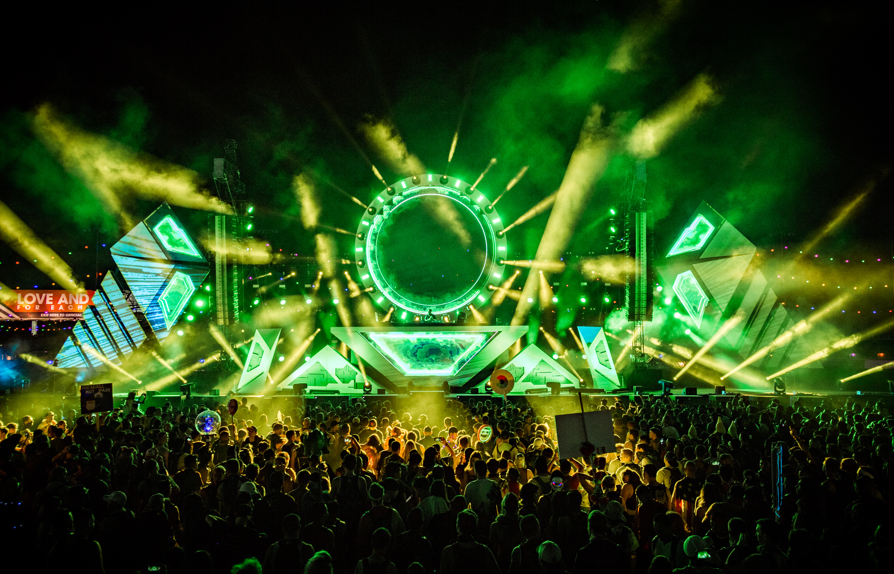
We have contributed to major live entertainment and scenic productions, including work on multiple EDC stages, as well as projects associated with artists and entertainment brands.
Our work often involves creating primary scenic features and custom structures that support the larger visual presentation. These projects require a combination of creative thinking, technical capability, and careful execution.
We believe our people are our greatest asset. Technology and equipment provide powerful manufacturing tools, but it takes experienced professionals to turn a creative concept into a well-executed finished product.
We enjoy taking on projects that challenge conventional fabrication and require different disciplines to work together.
For brands, event producers, creative agencies, and organizations looking for a custom fabrication company in Las Vegas, Statement Fabrication offers a broad range of capabilities under one roof.
Frequently Asked Questions About Choosing an Experiential Fabrication Company
What should I look for in an experiential fabrication company?
Look for relevant experience, multiple fabrication capabilities, modern equipment, strong craftsmanship, problem-solving ability, clear communication, and an understanding of the project’s intended environment.
What is the difference between an experiential fabrication company and a scenic fabricator?
Scenic fabricators produce physical scenic elements, structures, and environments. Experiential fabrication focuses on creating physical components that help people engage with an experience. Many scenic fabricators contribute to experiential projects.
Should an experiential fabricator have in-house capabilities?
In-house capabilities can be valuable when a project involves several materials and manufacturing processes. They may provide more flexibility when evaluating production methods and coordinating custom components.
How can I tell if a fabricator can handle large-scale sculptures?
Review examples of completed projects, ask about the materials and processes used, and discuss the dimensions and manufacturing requirements of your concept.
Does an experiential fabrication company provide design services?
Capabilities vary. Some companies manufacture from completed drawings, while others offer 3D modeling, prototyping, or design collaboration. Confirm the specific services available before beginning.
How important is 3D modeling for experiential projects?
It can be extremely useful for complex shapes, large structures, and installations involving multiple components. Modeling helps visualize dimensions, evaluate manufacturing requirements, and coordinate different elements.
Does experiential fabrication include installation?
Not automatically. Fabrication, transportation, assembly, and installation should be clearly defined in the project scope.
Why choose a Las Vegas fabrication company for an event project?
Las Vegas is home to a large convention, hospitality, and live entertainment market. A local fabrication company may offer convenient access to its facility and team, but the most important considerations remain relevant experience, manufacturing capabilities, quality, and the ability to meet project requirements.
Looking for a Fabrication Partner for Your Next Experience?
Creating something people will remember takes more than a good idea. It takes the right combination of creative thinking, technology, materials, craftsmanship, and execution.
Statement Fabrication is built for ambitious custom projects that challenge conventional manufacturing and push creative concepts further.
From large-scale scenic features and festival installations to immersive environments, brand activations, and oversized custom props, we enjoy finding ways to turn extraordinary ideas into physical reality.
Have a project in mind? Let’s talk about what we can build together.
Statement Fabrication — We Build Statements.