


Exhibits are designed to capture attention, communicate ideas, and create memorable impressions. From large trade show booths and branded environments to museum displays and custom product showcases, successful exhibits combine thoughtful design with carefully executed fabrication.
Behind every impressive exhibit is a process that transforms an idea into a physical space or display. This is where exhibit fabrication plays an essential role.
Exhibit fabrication brings together design, engineering, materials, technology, and skilled craftsmanship to create custom structures and displays that help businesses, organizations, and brands present themselves in distinctive ways.
For companies investing in a custom exhibit, understanding the fabrication process can make it easier to plan a project, evaluate capabilities, and select the right fabrication partner.
What Is Exhibit Fabrication?
Exhibit fabrication is the process of designing, engineering, and manufacturing physical structures and displays used to present products, brands, information, or experiences.
Unlike standard display systems or prefabricated booths, custom exhibit fabrication allows nearly every element to be developed around a specific vision, environment, and set of objectives.
An exhibit might be designed to showcase a new product, communicate a company’s history, demonstrate a technology, or create an engaging environment for visitors.
Depending on the project, fabrication may involve a combination of:
- Custom structural frameworks and platforms
- Architectural features and decorative elements
- Branded walls, signage, and dimensional lettering
- Product displays, pedestals, and presentation fixtures
- Sculptural elements and custom props
- Integrated materials, textures, and finishes
- Custom furniture, counters, and reception areas
- Three-dimensional displays and specialty components
The scope can range from a single custom display to a large, multi-component exhibit requiring several fabrication disciplines.
Common Types of Custom Exhibits
Exhibit fabrication supports a wide variety of industries and applications. While every project has different requirements, several types of exhibits are particularly common.
Trade Show Booths and Exhibits
Trade shows give businesses an opportunity to introduce products, connect with customers, and stand out in crowded exhibition halls.
Custom trade show fabrication can include branded booth structures, display walls, product presentation areas, counters, architectural features, and specialty components.
A well-designed booth must do more than look attractive. It should communicate the brand clearly, support the intended visitor experience, and function within the physical limitations of the event space.
Corporate and Brand Exhibits
Companies frequently use custom exhibits for corporate events, brand presentations, product launches, and customer-facing environments.
These projects may incorporate dimensional logos, branded architectural features, custom displays, interactive components, and carefully selected materials that reinforce a company’s identity.
Custom fabrication allows these elements to be developed as one cohesive presentation rather than a collection of unrelated display pieces.
Museum and Educational Exhibits
Museums, educational institutions, and visitor centers rely on exhibits to communicate information in engaging and accessible ways.
Fabricated components may include display structures, sculptural elements, informational panels, interactive stations, custom cases, and architectural features.
These environments often require a balance of visual appeal, durability, functionality, and careful consideration of how visitors move through and interact with the space.
Product Displays and Launch Installations
A product launch is an opportunity to make a strong first impression. Custom product displays help direct attention toward the item being introduced while creating a presentation that reflects its design, purpose, and brand.
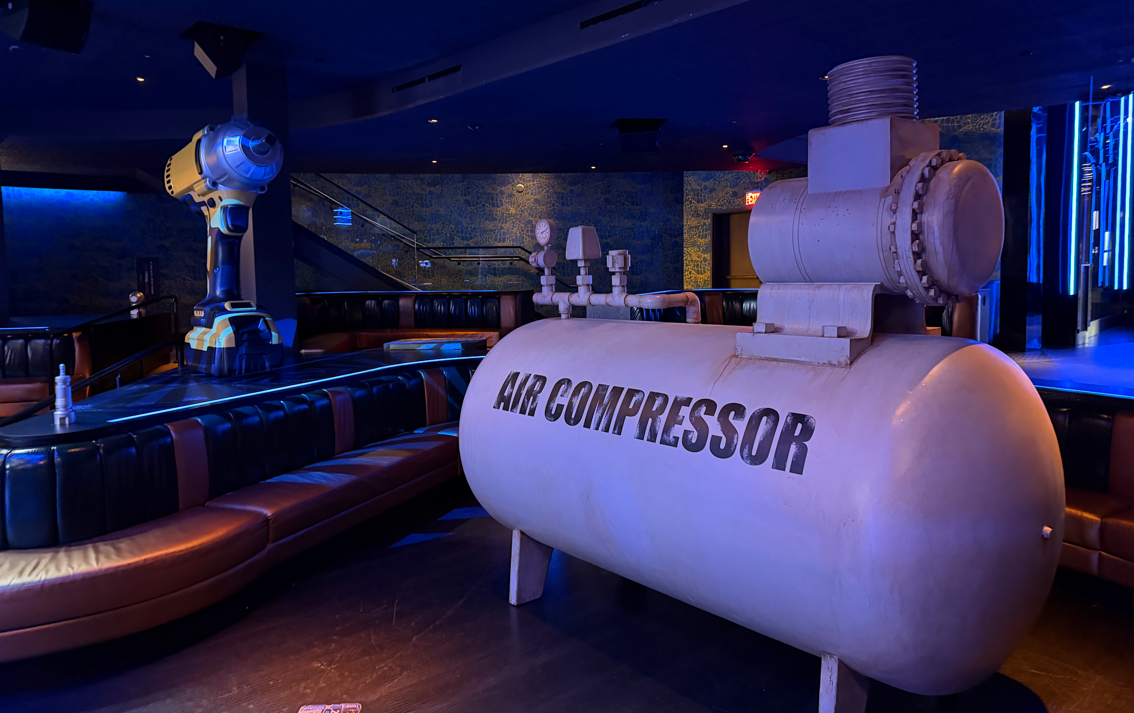
Fabrication may include custom pedestals, oversized product replicas, display platforms, branded backdrops, and specialty presentation structures.
These displays can be designed for trade shows, retail environments, corporate presentations, and special events.
Visitor Centers and Permanent Displays
Some exhibits are designed for long-term use rather than a single event.
Visitor centers, corporate lobbies, educational facilities, and public-facing spaces may incorporate permanent displays that communicate an organization’s mission, history, products, or accomplishments.
These projects require careful material selection and fabrication methods suited to the expected environment and duration of use.
Materials Used in Exhibit Fabrication
Material selection plays an important role in the appearance, performance, and overall cost of an exhibit.
The right materials depend on the design, intended application, required finish, expected use, transportation considerations, and project budget.
Common materials include:
Metal
Steel and aluminum are frequently used for structural frameworks, supports, platforms, brackets, and custom architectural features.
Metal fabrication provides opportunities for precision cutting, welding, forming, and creating components that support more complex designs.
Wood and Millwork Materials
Wood and engineered sheet materials are often used for counters, cabinetry, display fixtures, wall features, platforms, and finished architectural elements.
Custom millwork can help create a refined appearance while allowing components to be tailored to specific dimensions and design requirements.
Foam
Foam is useful for creating dimensional shapes, sculptural elements, decorative features, and oversized display components.
CNC foam carving and robotic cutting technologies allow complex shapes to be produced with precision and repeatability.
Foam components may be finished with coatings and other materials depending on the appearance and durability required.
Fiberglass
Fiberglass is a versatile option for custom shapes, sculptural components, curved surfaces, and specialty features.
It can be particularly useful when a design requires forms that would be difficult or impractical to produce using conventional materials.
Plastics and Specialty Materials
Various plastics and specialty materials can be incorporated into displays, protective components, decorative elements, and custom presentation features.
The final material selection should account for the design intent, fabrication requirements, and conditions in which the exhibit will be used.
The Role of Technology in Modern Exhibit Fabrication
Modern exhibit fabrication relies on more than traditional shop equipment and manual craftsmanship. Digital design and advanced manufacturing technologies make it possible to develop and produce increasingly complex components.
3D Modeling and Design
Three-dimensional modeling allows project teams to develop and evaluate an exhibit before physical production begins.
Models can help communicate proportions, identify potential conflicts, explore design options, and provide a clearer understanding of how individual components fit together.
3D Printing and Prototyping
3D printing can be used to create prototypes, detailed components, specialty parts, and physical models.
Prototyping is particularly valuable when a project includes unusual shapes, custom connections, or components that benefit from being evaluated before full production.
CNC Cutting and Precision Manufacturing
CNC laser cutting, tube laser processing, and other computer-controlled manufacturing methods help produce accurate components from digital designs.
These technologies support repeatable production and can reduce the difficulty of manufacturing intricate or precisely dimensioned parts.
Robotic and Specialized Fabrication
Robotic cutting and other specialized manufacturing processes can help produce complex forms and components efficiently.
Combined with experienced fabrication professionals, these tools expand the range of shapes, materials, and finishes that can be incorporated into custom exhibits.
Technology does not replace craftsmanship. It gives skilled teams more tools to execute challenging designs with greater precision.
What Makes a Successful Exhibit?
A successful exhibit is the result of multiple elements working together.
Purpose and communication: The exhibit should have a clear objective. Whether it is introducing a product, educating visitors, or strengthening brand recognition, its design should support that purpose.
Visual impact: Exhibits often compete for attention. Strong proportions, distinctive forms, thoughtful material choices, and quality finishes help create a memorable presentation.
Functionality: Displays must work in their intended environment. Visitor access, product placement, equipment requirements, storage, and practical use should all be considered.
Fabrication quality: Details matter. Accurate dimensions, clean finishes, consistent materials, and well-executed connections contribute to the overall result.
Coordination: Complex exhibits can involve many components and fabrication disciplines. Clear communication and thoughtful coordination help keep the work aligned with the intended design.
Why Custom Exhibit Fabrication Matters
Off-the-shelf display systems can be useful for straightforward applications, but they may not provide the flexibility needed for distinctive or highly customized presentations.
Custom fabrication makes it possible to create displays around a specific brand, product, space, or concept.
It also allows different materials and manufacturing methods to be combined into a cohesive finished product. A single exhibit might incorporate welded metal structures, custom millwork, CNC-carved foam, fiberglass components, and 3D-printed details.
Having access to multiple fabrication disciplines can make a significant difference when a project requires unusual shapes, specialized finishes, or several different types of components.
Exhibit Fabrication at Statement Fabrication
Statement Fabrication is a Las Vegas-based custom fabrication company specializing in bringing ambitious concepts to life.
Our capabilities span multiple fabrication disciplines, including metal fabrication, custom millwork, fiberglass, CNC foam sculpting, 3D printing, laser cutting, and 3D modeling.
This range of capabilities allows us to approach exhibit projects with a broad manufacturing perspective. Rather than limiting a design to one material or process, we can explore different ways to produce the components needed to achieve the intended result.
We believe great fabrication starts with great people. Our team’s experience, creativity, and commitment to craftsmanship are central to every project we take on.
From individual display components to complex custom-built exhibits, we enjoy solving challenging fabrication problems and turning ambitious ideas into physical statements.
Frequently Asked Questions About Exhibit Fabrication
What is the difference between exhibit fabrication and exhibit design?
Exhibit design focuses on the concept, layout, appearance, and visitor experience. Exhibit fabrication is the process of producing the physical structures, displays, and components that bring that design to life. The two disciplines often work closely together.
What types of exhibits can be custom fabricated?
Custom exhibits can include trade show booths, branded displays, product showcases, museum exhibits, visitor center installations, corporate presentations, and specialty display structures.
What materials are commonly used for custom exhibits?
Common materials include steel, aluminum, wood, engineered sheet materials, foam, fiberglass, plastics, and specialty finishes. The best choice depends on the design and intended application.
Can multiple materials be combined in one exhibit?
Yes. Many custom exhibits incorporate several materials and fabrication methods. Combining metal, wood, foam, fiberglass, and other materials can help achieve designs that would be difficult to produce using a single material.
How does 3D modeling help with exhibit fabrication?
3D modeling helps visualize the exhibit, evaluate dimensions, coordinate components, and identify potential challenges before manufacturing begins.
Can custom exhibits be built for one-time events?
Yes. Exhibits can be designed for temporary events, recurring trade shows, product launches, or longer-term installations. Material and construction choices should reflect the intended use.
What should I look for in an exhibit fabrication company?
Look for relevant experience, in-house fabrication capabilities, technical resources, quality craftsmanship, clear communication, and the ability to understand the practical requirements of your project.
Does Statement Fabrication build custom exhibits?
Statement Fabrication offers a broad range of custom fabrication capabilities that can support exhibit projects, including metal fabrication, millwork, fiberglass, foam sculpting, 3D printing, and precision manufacturing.
Bring Your Exhibit Concept to Life
A great exhibit should do more than display a product or communicate information. It should create a presentation that people notice, remember, and associate with your brand.
Statement Fabrication enjoys working on ambitious custom fabrication projects that challenge conventional thinking and push creative ideas further.
If you have an exhibit concept that requires creativity, technical capability, and quality craftsmanship, we’d like to hear about it.
Statement Fabrication — We Build Statements.