



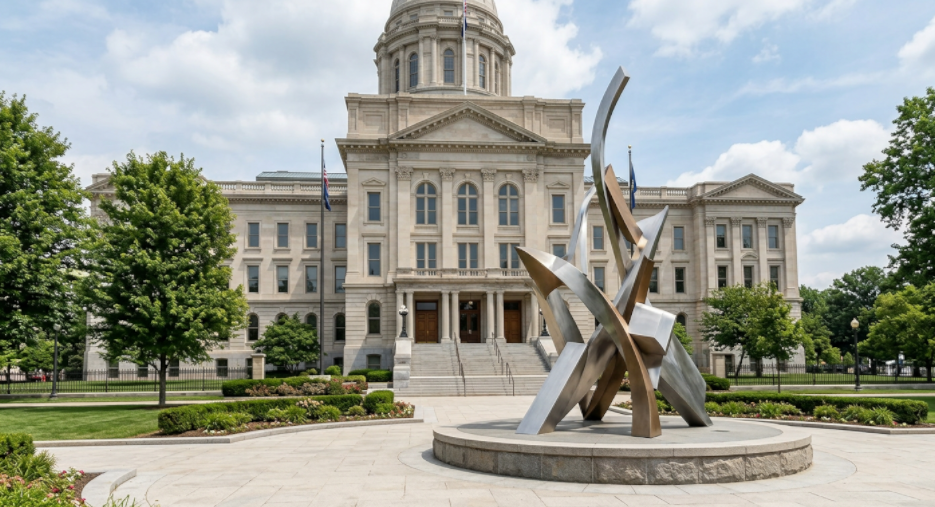
Finding the Right Fabrication Partner for a Government Project
Government projects can involve unique requirements, detailed specifications, and a wide range of physical components that must be produced accurately and reliably.
Some projects call for custom metal assemblies or specialty structures. Others require architectural features, public displays, educational installations, custom fixtures, or components designed for a specific operational purpose.
Regardless of the application, choosing the right fabrication company is an important part of the process.
A capable fabrication partner should understand the project requirements, have the appropriate production capabilities, communicate clearly, and demonstrate the ability to deliver work that meets the agreed-upon specifications.
For government agencies, general contractors, procurement teams, and project managers, evaluating a fabricator involves more than comparing prices.
Here are the most important factors to consider when selecting a government fabrication company.
1. Identify the Fabrication Requirements Before Evaluating Vendors
Before requesting proposals, establish what the project actually requires.
Government fabrication projects can range from relatively simple custom components to complex structures involving several materials and production methods.
Start by identifying:
- The intended function of the fabricated product
- Required dimensions and tolerances
- Materials and finish specifications
- Design drawings and technical documents
- Quantity and production requirements
- Required delivery dates
- Inspection and acceptance criteria
- Packaging and transportation requirements
- Any site-access or security considerations
Not every project will have a complete set of drawings at the beginning. However, identifying what is known and what still needs to be developed will help prospective fabricators evaluate the work more accurately.
A clear scope also makes it easier to compare proposals from different companies.
2. Look for Relevant Fabrication Experience
Fabrication companies often specialize in different types of work.
A company that primarily builds residential metal products may not be the right fit for a large architectural installation. A traditional millwork shop may not have the equipment or experience needed for a complex fiberglass component.
Look for experience that aligns with the actual project.
Depending on your requirements, relevant experience might include:
- Custom metal fabrication
- Specialty structures and assemblies
- Commercial and architectural fabrication
- Custom display construction
- Fiberglass fabrication
- Large-scale sculptural features
- CNC foam carving
- 3D modeling and prototyping
- Custom fixtures and enclosures
Ask to see examples of comparable work and understand exactly what the fabricator contributed to each project.
Relevant experience demonstrates more than the ability to produce a particular shape. It can also show how the company approaches planning, materials, fabrication challenges, and quality.
3. Evaluate the Company’s In-House Capabilities
One of the most important considerations is whether a fabrication company has the equipment, personnel, and processes needed to complete your project.
Some jobs require only one discipline. Others involve several.
For example, a specialty display structure may require metal fabrication, carpentry, CNC carving, fiberglass, and finishing.
A company with multiple capabilities may be able to coordinate more of the production process internally, reducing the number of separate vendors involved.
When evaluating capabilities, ask whether the company offers:
Metal Fabrication
Can it cut, form, weld, and produce custom metal components and assemblies?
Carpentry and Millwork
Can it build cabinetry, counters, display structures, custom fixtures, and architectural features?
Fiberglass Fabrication
Can it produce custom shapes, enclosures, sculptural components, and specialty finished parts?
Foam Sculpting and CNC Carving
Can it create dimensional forms, models, lettering, and specialty sculpted components?
3D Modeling and Printing
Can it develop digital models, prepare production files, and produce prototypes or specialty parts?
Finishing
Can it provide the required paint, coating, texture, or surface treatment?
It is also important to clarify which processes are performed in-house and which are subcontracted.
A company does not necessarily need to perform every process itself, but the division of responsibility should be transparent.
4. Confirm the Company Can Meet Technical Specifications
Government projects may include detailed specifications that define how a product must be constructed and evaluated.
These may cover materials, dimensions, tolerances, finishes, connections, testing, documentation, and inspection requirements.
A fabricator should be comfortable reviewing technical documents and identifying questions before production begins.
Ask how the company handles:
- Drawing reviews
- Material verification
- Dimensional checks
- Production documentation
- Quality-control procedures
- Revision management
- Inspection coordination
- Final acceptance requirements
If a specification is unclear or appears inconsistent with the proposed design, the fabricator should raise the issue before proceeding.
For structural, electrical, fire-safety, or other regulated requirements, determine which qualified professionals are responsible for engineering, approvals, and compliance.
A fabrication company should not be expected to assume responsibilities outside its agreed scope or qualifications.
5. Understand Government Procurement and Contract Requirements
Government procurement can involve procedures and obligations that differ from private-sector purchasing.
Depending on the agency, contract type, and project, requirements may address vendor registration, bidding procedures, subcontracting, insurance, certifications, quality systems, security, reporting, or other contractual obligations.
Do not assume that every government project requires the same qualifications.
Before selecting a fabricator, review the actual solicitation, purchase order, contract, and applicable flow-down requirements.
Important questions include:
- Is the fabricator bidding directly or working as a subcontractor?
- Are specific registrations or certifications required?
- Are there mandatory insurance requirements?
- Are there security or facility-access restrictions?
- Are there domestic sourcing or material requirements?
- Are there documentation or reporting obligations?
- Are there specific inspection and acceptance procedures?
The company should be able to identify which requirements it can meet and which need further clarification.
Any required certifications, registrations, or qualifications should be verified rather than assumed.
6. Review Quality Control and Workmanship
Quality is especially important when fabricated components must meet specific dimensions, appearance standards, or functional requirements.
A fabricator should be able to explain how quality is monitored during production and how completed work is checked before delivery.
Depending on the project, quality-control considerations may include:
- Material identification and verification
- Dimensional inspections
- Weld and connection inspections
- Surface preparation and finish review
- Fit and assembly checks
- Documentation of inspection results
- Packaging and protection
- Final product review
Ask whether the company has documented procedures that align with the project’s requirements.
Also review examples of its finished work. Examine the fit, finish, consistency, and overall craftsmanship.
The goal is to find a company that takes the details seriously and understands that quality means meeting the agreed-upon requirements, not simply producing something that looks acceptable.
7. Evaluate Communication and Responsiveness
Government projects can involve several organizations and decision-makers.
The fabrication company may need to communicate with procurement personnel, government representatives, general contractors, architects, engineers, designers, and other subcontractors.
Clear communication helps keep everyone aligned.
Look for a company that:
- Responds to questions in a timely manner
- Reviews documents carefully
- Identifies missing information
- Communicates potential production issues
- Tracks revisions and approvals
- Provides realistic schedule updates
- Clearly identifies responsibilities
A good fabrication partner should be comfortable discussing problems and proposing practical solutions.
It should also understand that changes to approved drawings, materials, or specifications may affect cost and schedule.
8. Consider Production Capacity and Equipment
A company’s capabilities are only part of the equation. It must also have the capacity to complete the work within the required timeframe.
Consider whether the company has adequate facility space, equipment, personnel, and production planning to handle the project.
Ask about:
- Current production workload
- Available fabrication equipment
- Material procurement lead times
- Production sequencing
- Required outside services
- Quality-control checkpoints
- Packaging and delivery planning
For larger projects, consider whether the fabricator can produce multiple components consistently and coordinate their completion.
A company with a capable facility and experienced team may be better positioned to manage complex fabrication requirements than a vendor relying on a limited set of production methods.
9. Compare Proposals and Total Project Value
Price is an important part of any procurement decision, but proposals should be evaluated against the full scope of work.
Two companies may quote different prices because they are proposing different materials, processes, production methods, or levels of service.
Compare proposals for:
- Scope and quantities
- Materials and specifications
- Dimensions and tolerances
- Design and engineering responsibilities
- Production and finishing methods
- Quality-control requirements
- Documentation and submittals
- Packaging and delivery
- Assembly or installation, if required
- Exclusions and assumptions
- Schedule and payment terms
If a proposal appears significantly less expensive than others, ask what accounts for the difference.
A lower price may reflect a more efficient production method, but it may also reflect omitted requirements or a different interpretation of the scope.
The best proposal is one that clearly addresses the project’s requirements and establishes a realistic path to completion.
10. Clarify Delivery, Assembly, and Installation
The finished fabrication is only one part of the project.
Some products can be shipped as completed components. Others need to be divided into sections, assembled at the destination, or coordinated with other trades.
Before awarding the work, clarify:
- Who is responsible for packaging?
- Who arranges transportation?
- Are there special handling requirements?
- Does the product require on-site assembly?
- Is specialized equipment needed for placement?
- Who coordinates installation?
- Are site inspections or approvals required?
Government facilities may also have specific delivery windows, access procedures, security requirements, and documentation requirements.
These responsibilities should be addressed in the contract or purchase order.
Delivery, assembly, rigging, and installation are project-specific services and should never be assumed to be included unless they are explicitly part of the agreed scope.
Questions to Ask Before Selecting a Government Fabricator
The following questions can help procurement teams, contractors, and project managers evaluate potential fabrication partners:
- Have you completed projects with similar materials, dimensions, or technical requirements?
- Which fabrication processes do you perform in-house?
- Can you review and work from our technical drawings and specifications?
- How do you handle design revisions and production approvals?
- What quality-control procedures are used during fabrication?
- Can you provide documentation or inspection records required by the project?
- What certifications, registrations, or qualifications do you currently hold, if any?
- What is your current production capacity and estimated lead time?
- Which services are included in your proposal, and which are excluded?
- Can you provide examples of comparable completed work?
These questions help establish whether the fabricator is a practical fit for the project’s technical, operational, and contractual requirements.
Why Consider Statement Fabrication?
Statement Fabrication is a Las Vegas-based custom fabrication company with multiple production capabilities under one roof.
Our capabilities include metal fabrication, carpentry and millwork, fiberglass fabrication, foam sculpting, CNC foam carving, 3D modeling, 3D printing, and specialty finishing.
This multidisciplinary approach allows us to take on projects that require different materials, custom shapes, specialty components, and coordinated production methods.
We believe successful fabrication is built on four strengths:
Experience: Understanding the challenges involved in turning custom concepts into finished products.
Technology: Using modern equipment and digital processes to support precision and production efficiency.
Craftsmanship: Applying attention to detail throughout fabrication and finishing.
Execution: Bringing the right people, processes, and capabilities together to complete the work.
Our team is our greatest asset. We take pride in approaching challenging projects with creativity, practical problem-solving, and a commitment to quality.
For government agencies, contractors, and project teams seeking a custom fabrication partner, we welcome the opportunity to review project requirements and determine whether our capabilities are a fit.
Choosing a Fabricator That Understands the Requirements
Selecting a government fabrication company requires a clear understanding of the project’s scope, technical requirements, procurement conditions, and expected deliverables.
The right partner should have the relevant capabilities, a demonstrated commitment to quality, and the ability to communicate and coordinate throughout the production process.
Whether the project involves custom structures, public displays, architectural features, specialty assemblies, or other fabricated components, a thoughtful selection process helps reduce uncertainty and establish a stronger foundation for successful execution.
Statement Fabrication builds custom structures, features, and specialty components for projects that require creativity, technology, craftsmanship, and execution.
Contact Statement Fabrication to discuss your project and fabrication requirements.
Frequently Asked Questions
What should I look for in a government fabrication company?
Evaluate relevant experience, fabrication capabilities, quality-control practices, technical understanding, production capacity, and ability to meet contractual requirements.
Do government fabrication companies need special certifications?
Some contracts require specific certifications or registrations, while others do not. Requirements depend on the agency, contract, and scope of work.
Can a government contractor subcontract fabrication work?
Yes. Government contractors may use qualified fabrication subcontractors when permitted by the contract and applicable procurement requirements.
What documentation might a government fabricator need to provide?
Depending on the project, documentation may include drawings, material information, inspection records, quality documentation, and delivery records.
Can a fabricator work from government-provided specifications?
Yes. Fabricators can review supplied drawings and specifications to determine production requirements, identify questions, and develop proposals.
How do I compare government fabrication proposals?
Compare scope, materials, dimensions, production methods, quality requirements, documentation, schedule, delivery, exclusions, and total project cost.
Does government fabrication include installation?
Not automatically. Delivery, assembly, rigging, and installation should be discussed and defined separately in the project scope.
Does Statement Fabrication work on government-related fabrication projects?
Statement Fabrication offers multidisciplinary custom fabrication capabilities for contractors and project teams seeking specialty structures, components, displays, and architectural features.