


Film and television productions often require physical elements that simply cannot be purchased off the shelf. From oversized props and detailed sculptures to custom scenic structures and complete production environments, these projects call for specialized fabrication, creative problem-solving, and the ability to turn unique concepts into physical builds.
Custom film and TV fabrication gives production designers, art directors, set decorators, and production teams the flexibility to create pieces that match a specific creative vision. Whether the project involves a single specialty prop, a large scenic feature, or multiple fabricated elements for a production, the right fabrication partner can help make ambitious ideas possible.
At Statement Fabrication, we bring together metal fabrication, carpentry, foam sculpting, fiberglass, 3D modeling, 3D printing, and other specialty capabilities to tackle projects that require different materials and fabrication methods.
What Can Be Custom Fabricated for Film and TV?
The possibilities for production fabrication are extensive. Every project has its own visual direction, functional requirements, and production constraints. Some builds are intended to look realistic, while others are designed to create entirely fictional objects and environments.
Common applications include:
- Custom film and television set pieces
- Scenic backdrops and architectural features
- Specialty props and oversized objects
- Sculptures, characters, and decorative elements
- Custom furniture and millwork
- Themed walls, facades, and structures
- Product replicas and branded displays
- Specialty platforms and support structures
- Custom models, prototypes, and dimensional components
The following applications represent some of the ways custom fabrication can support film, television, streaming, commercial, and music video productions.
Custom Set Pieces and Scenic Structures
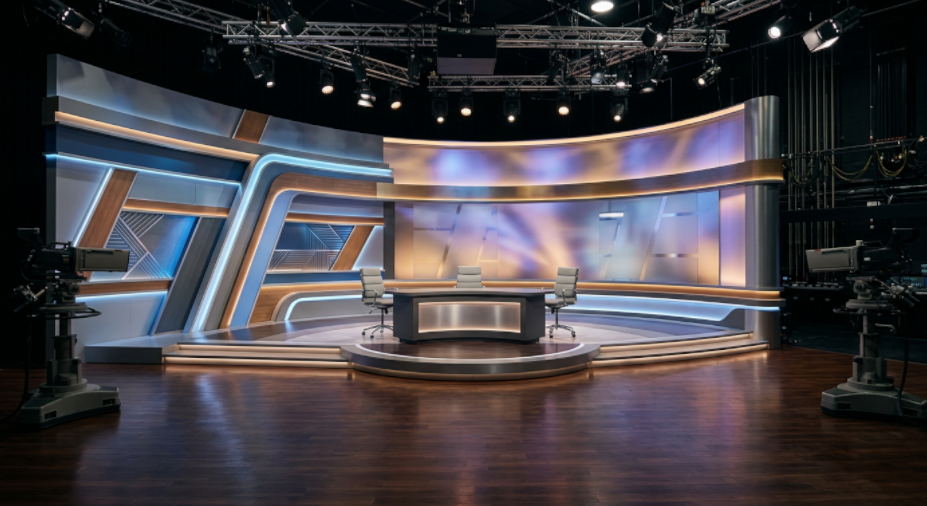
Sets help establish the world in which a story takes place. While some productions use existing locations or standard set construction, others require custom-built features to create a specific visual environment.
Fabricated set pieces can include architectural details, specialty walls, decorative facades, columns, platforms, counters, dimensional backdrops, and other elements that contribute to the appearance of a scene.
Architectural and Decorative Features
Custom architectural elements can help transform a basic studio space or location into a distinctive environment.
Examples include:
- Decorative columns and arches
- Custom wall panels and dimensional surfaces
- Specialty doorways and window surrounds
- Decorative ceiling features
- Custom counters and reception areas
- Themed architectural facades
- Oversized decorative structures
These pieces may be designed to resemble traditional construction materials or take on a completely imaginative appearance.
Scenic Backdrops and Feature Elements
Scenic features can provide visual depth and help establish the atmosphere of a production. They may be realistic, stylized, futuristic, industrial, historical, or abstract.
Fabrication techniques such as CNC cutting, foam sculpting, metalwork, fiberglass, and custom finishing can be combined to produce complex scenic elements that would be difficult to achieve with standard materials.
Custom Props and Oversized Objects
Props are often among the most recognizable fabricated elements in a production. When a script or creative concept calls for something unusual, a custom-built prop can provide the exact shape, size, and appearance required.
Custom props can include:
- Oversized everyday objects
- Fictional devices and specialty equipment
- Sculptural objects and decorative pieces
- Custom furniture and fixtures
- Product replicas and display models
- Themed objects and specialty components
- Large-scale visual elements for camera
Hero Props and Camera-Focused Details
Some props receive significant attention on camera and require a higher level of detail. Their proportions, surface textures, colors, and finishes may need to be carefully developed to match the production’s visual direction.
Digital modeling, prototyping, hand craftsmanship, and specialty finishing can all contribute to producing these pieces.
Lightweight and Specialty Prop Construction
Not every prop needs to be built from the material it appears to represent. Foam, fiberglass, plastics, wood, and other materials can be used to create objects with a particular appearance while accounting for weight, handling, and intended use.
For props that will be handled, moved, or used during a scene, the fabrication approach should be based on the production’s actual requirements. Functional props, stunt-related pieces, and specialty effects components may require additional design, testing, and approval by qualified production personnel.
Large-Scale Sculptures and Custom Characters
Large sculptures, oversized figures, creatures, and other specialty forms can help create memorable visual moments in film and television.
These pieces often involve complex shapes and organic geometry that require specialized sculpting and fabrication techniques.
Foam Sculpting and Robotic CNC Carving
Foam is a versatile material for producing large sculptural forms and dimensional elements. It can be shaped by hand or through CNC and robotic carving technology to create detailed forms from digital models or physical design references.
Applications include:
- Large-scale sculptures
- Oversized characters and figures
- Creature and fantasy-inspired forms
- Decorative architectural details
- Dimensional scenic features
- Specialty props and themed objects
Robotic foam carving can be especially useful when a design includes complex contours, repeated shapes, or intricate geometry. Once carved, foam components can be coated, reinforced, and finished according to the intended application.
Fiberglass Sculptures and Durable Forms
Fiberglass can be used to create lightweight, durable sculptural shells and specialty shapes. It is particularly useful when a piece needs a finished exterior that can be painted, textured, or detailed.
Depending on the design, fiberglass fabrication may be combined with foam sculpting, internal structural components, and specialty finishing to produce a complete fabricated object.
Custom Metal Fabrication for Film and TV
Metal fabrication plays an important role in production builds that require strength, rigidity, custom geometry, or a particular industrial appearance.
Steel and aluminum can be cut, formed, welded, and assembled into a wide variety of components.
Potential applications include:
- Custom frames and internal supports
- Specialty platforms and structures
- Industrial-themed scenic elements
- Custom furniture and fixtures
- Decorative metal features
- Specialty assemblies and brackets
- Architectural components
- Custom prop structures
Metal components can also serve as the internal framework for larger fabricated pieces made from foam, fiberglass, wood, or other materials.
The appropriate material and construction method depend on the intended use, dimensions, loads, finish, and any applicable safety requirements.
Custom Carpentry and Millwork
Carpentry and millwork provide another important part of film and television fabrication. Wood and engineered wood products can be used to create custom set pieces, furniture, cabinetry, decorative features, and specialty scenic construction.
Examples include:
- Custom cabinets and built-ins
- Specialty tables and furniture
- Decorative wall treatments
- Custom counters and desks
- Wood architectural features
- Platforms and scenic structures
- Specialty enclosures and housings
Carpentry can also be combined with metal fabrication and other materials to create more complex assemblies.
3D Modeling, Printing, and Digital Fabrication
Digital technology has expanded what production teams can create and how custom pieces can be developed.
3D modeling allows a design to be evaluated before physical fabrication begins. Models can help establish dimensions, proportions, relationships between components, and potential construction challenges.
Once a design is developed, digital manufacturing processes can help produce the required parts.
3D Modeling and Design Development
Digital models can help production teams communicate design intent and make revisions before committing to materials and labor.
They can be especially useful for:
- Complex sculptural shapes
- Detailed custom props
- Large fabricated assemblies
- Repeated components
- Parts that must fit together precisely
- Prototypes and design validation
3D Printing and Prototyping
3D printing can produce detailed components, small props, models, prototypes, and specialty shapes that may be difficult to create using conventional methods.
It can also be used to test a design before producing a larger version through foam carving, fiberglass fabrication, or other manufacturing processes.
CNC and Laser Cutting
CNC routing and laser cutting can help produce precise components from sheet materials and other suitable stock. These processes can support custom panels, decorative patterns, dimensional details, templates, and specialty parts.
Digital fabrication is particularly useful when a project requires accuracy, repeatability, or coordination between multiple fabricated components.
Combining Multiple Fabrication Methods
Some of the most interesting production builds require more than one material or fabrication discipline.
A large sculptural prop, for example, might begin with a digital model, use CNC foam carving to establish its shape, incorporate a metal support structure, and receive a fiberglass coating and custom paint finish.
A specialty scenic feature might combine:
- Metal framing and structural components
- Custom carpentry and millwork
- CNC-cut panels and decorative details
- Foam-sculpted shapes
- Fiberglass components
- 3D-printed specialty parts
- Custom paint and finishing
When these processes are coordinated, a fabrication team can approach a project as one integrated build rather than requiring the production team to manage several unrelated fabrication vendors.
Important Considerations When Planning a Production Build
Before fabrication begins, it is helpful to establish how each piece will be used and what the production needs from the finished result.
Design and Reference Materials
Concept art, sketches, reference images, technical drawings, dimensions, and 3D models can all help communicate the intended result.
Not every project begins with complete construction documents. Some concepts need additional development before fabrication can be accurately estimated and scheduled.
Intended Use and Functionality
A decorative piece that only appears in the background may have very different requirements from a prop that an actor handles or a structure that supports equipment or people.
Understanding how an element will be used helps determine its materials, construction, weight, finish, and any necessary testing or engineering.
Camera and Lighting Requirements
Surface appearance, reflections, scale, texture, and color can all affect how an object appears on camera.
The fabrication team should understand whether a piece will be viewed from a distance, photographed in close-up, moved during a scene, or used from multiple camera angles.
Schedule and Production Coordination
Production timelines can be demanding. Fabrication schedules should account for design approvals, material sourcing, construction, finishing, revisions, and delivery requirements.
Clear communication helps identify potential challenges before they affect the production schedule.
Transportation and Assembly
Large or complex pieces may need to be designed for transport, modular assembly, or movement through studio and location access points.
Assembly, delivery, and on-site installation should be discussed during project planning because these services depend on the scope, location, and specific production requirements.
Why Work With a Full-Service Fabrication Company?
When a production requires several different types of fabricated elements, working with a shop that offers multiple capabilities can simplify the process.
A full-service fabrication company may be able to coordinate metalwork, carpentry, sculpting, fiberglass, digital manufacturing, and finishing within one facility.
Potential advantages include:
- Fewer handoffs between fabrication vendors
- Better coordination between materials and processes
- More flexibility when solving design challenges
- Consistent communication throughout the build
- Greater control over fabrication quality
- The ability to approach complex projects as integrated assemblies
The right arrangement depends on the project, but having multiple fabrication disciplines available can be valuable when creative concepts require more than conventional construction.
Custom Film & TV Fabrication at Statement Fabrication
Statement Fabrication is a Las Vegas-based custom fabrication company with the capabilities and equipment to tackle a wide range of creative and technically challenging projects.
Our shop brings together metal fabrication, welding, carpentry and millwork, fiberglass fabrication, foam sculpting, CNC foam carving, 3D modeling, 3D printing, and specialty finishing.
This combination allows our team to approach projects that require multiple fabrication methods, materials, and levels of detail.
We understand that creative production work is rarely one-size-fits-all. Each project brings its own design requirements, dimensions, schedule, and practical considerations. Our goal is to work with clients to understand those requirements and develop a fabrication approach that brings the concept to life.
Whether you need a custom prop, oversized sculpture, specialty scenic element, architectural feature, or a more involved production build, Statement Fabrication is ready to discuss the possibilities.
Have a production concept that needs to become reality? Contact Statement Fabrication to discuss your next custom build.
Frequently Asked Questions About Custom Film & TV Fabrication
What types of custom props can be made for film and television?
Custom props can include oversized objects, fictional devices, sculptures, specialty furniture, replicas, decorative pieces, and production-specific objects.
Can a fabrication company build large-scale sculptures for film sets?
Yes. Foam sculpting, CNC carving, fiberglass, metalwork, and specialty finishing can be combined to produce large custom sculptures.
What is the best material for large movie props?
The best material depends on size, appearance, weight, durability, handling requirements, and how the prop will be used.
Can foam be used to create realistic film props?
Yes. Foam can be sculpted, CNC carved, coated, reinforced, and finished to achieve a wide variety of appearances.
What is fiberglass used for in film production?
Fiberglass is useful for lightweight sculptural shells, custom props, specialty forms, decorative components, and durable finished surfaces.
Can 3D printing be used to make movie props?
Yes. 3D printing can produce detailed props, prototypes, models, specialty components, and complex custom shapes.
Can metal and wood be combined in a custom set piece?
Yes. Metal framing and wood construction are often combined to create custom structures, furniture, scenic features, and specialty assemblies.
Can Statement Fabrication build a project from concept art?
Potentially. Concept art and reference materials can provide a starting point for discussing design development, feasibility, and fabrication requirements.
Does Statement Fabrication offer multiple fabrication services under one roof?
Yes. Capabilities include metal fabrication, carpentry, fiberglass, foam sculpting, CNC carving, 3D printing, and custom fabrication.
Does Statement Fabrication provide delivery and installation for production builds?
Delivery, assembly, and installation can be discussed based on project scope, location, schedule, and specific requirements.
Let’s Build Something for the Screen
From individual specialty props to large scenic features and complex custom assemblies, film and television fabrication makes it possible to create physical elements that bring production concepts to life.
With the right combination of technology, materials, and craftsmanship, even unusual creative ideas can become tangible builds.
Statement Fabrication — We Build Statements.