


What Is Government Fabrication?
Government fabrication involves the design, development, and production of custom physical components, structures, displays, and specialty features for government agencies and public-sector organizations.
These projects can support a wide range of applications, including administrative buildings, public facilities, transportation environments, educational institutions, military-support facilities, visitor centers, museums, training environments, and specialized government operations.
Unlike many off-the-shelf products, custom fabricated solutions can be developed around the specific dimensions, functions, materials, and requirements of a project.
A government facility may need a specialized reception feature, a durable public information display, a custom architectural installation, a demonstration structure, or a unique component that cannot be sourced through traditional suppliers.
Government fabrication helps turn those requirements into physical solutions.
The work can involve several disciplines, including metal fabrication, carpentry and millwork, fiberglass fabrication, foam sculpting, 3D modeling, 3D printing, CNC machining, and specialty finishing.
Why Government Projects Require Custom Fabrication
Government facilities and public-sector projects serve many different purposes. Some are designed for public access, while others support specialized operations, training, administration, or technical functions.
The requirements of these environments can differ significantly.
Custom fabrication provides flexibility when a project calls for something specifically designed around its intended use.
Purpose-Built Solutions
Government agencies may have requirements that do not align with standard commercial products.
Custom fabrication allows components to be developed around specific dimensions, functions, material requirements, and site conditions.
Examples include specialty enclosures, custom equipment supports, architectural features, display structures, and purpose-built fixtures.
Durability and Long-Term Use
Many government facilities experience frequent use and must accommodate a variety of visitors, employees, and operational activities.
Materials and construction methods should be selected with the intended environment in mind.
Depending on the application, projects may require durable metal components, reinforced structures, protective coatings, specialty surfaces, or materials selected for maintenance and long-term performance.
Public-Facing Environments
Government buildings often serve as important points of contact between public agencies and the communities they support.
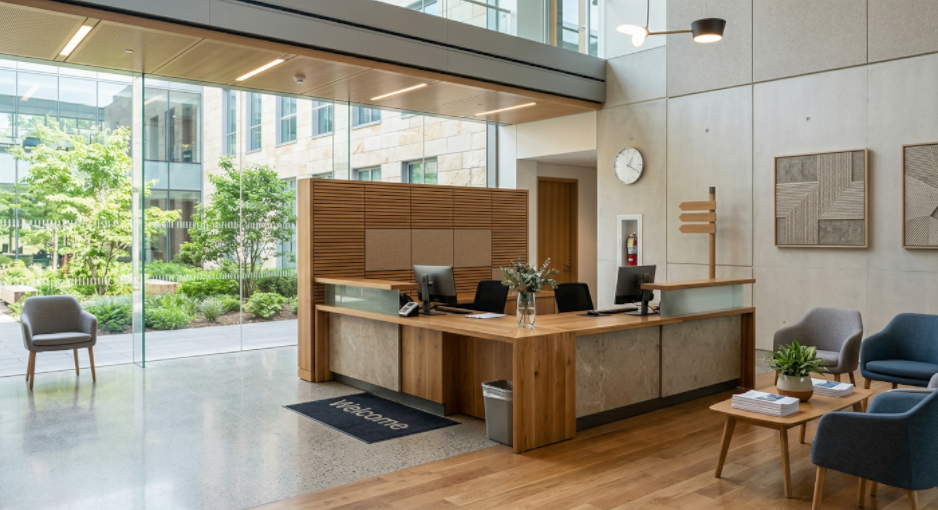
Custom reception areas, information displays, architectural features, educational exhibits, and visitor installations can help make these environments more functional and welcoming.
Specialized Requirements
Some projects involve unusual dimensions, complex shapes, custom interfaces, or specific construction details.
Digital modeling, prototyping, and multidisciplinary fabrication can help develop solutions for applications that require a more specialized approach.
Common Applications of Government Fabrication
Government fabrication is not limited to one type of facility or project. Custom components can support a variety of public-sector environments.
Government Buildings and Administrative Facilities
Administrative buildings may require custom reception desks, counters, architectural features, signage structures, display systems, cabinetry, and specialty fixtures.
These features can support daily operations while helping establish a professional and cohesive environment.
Public Spaces and Community Facilities
Libraries, civic centers, public buildings, visitor facilities, and other community environments may benefit from custom fabricated elements.
Potential applications include:
- Custom information counters
- Architectural feature walls
- Public information displays
- Decorative metalwork
- Sculptural installations
- Custom seating and fixtures
- Branded environmental features
- Specialty display structures
These features should be designed around public use, accessibility, maintenance, and applicable building requirements.
Museums, Visitor Centers, and Educational Displays
Government agencies and public institutions often communicate complex information through physical exhibits and displays.
Custom fabrication can support educational installations, historical displays, interactive exhibits, oversized models, dimensional graphics, and specialty presentation structures.
These projects may combine metal frameworks, millwork, fiberglass, sculpted forms, printed graphics, and digital fabrication to create engaging environments.
Training and Demonstration Environments
Some government projects require physical structures or demonstration components that help communicate procedures, equipment functions, or technical concepts.
Fabricated components may include display platforms, mockups, demonstration structures, training props, specialty fixtures, and purpose-built assemblies.
The design and production process should be guided by the actual training application and the technical specifications supplied by the responsible project team.
Specialized Structures and Assemblies
Certain projects require custom-built structures or assemblies that cannot be fulfilled with standard catalog products.
These may involve specialty metal fabrication, custom enclosures, supports, frames, fabricated housings, and components designed around project-specific requirements.
Where structural performance, safety, or technical compliance is involved, appropriate engineering and review by qualified professionals are essential.
Materials and Processes Used in Government Fabrication
The materials and processes used in a government fabrication project depend on its intended function, environment, specifications, and required service life.
A multidisciplinary fabrication company can help evaluate different approaches.
Metal Fabrication
Steel and aluminum are frequently used for frames, supports, brackets, platforms, enclosures, architectural elements, and custom assemblies.
Metal components can be cut, formed, welded, machined, and finished to meet project-specific requirements.
Carpentry and Millwork
Wood and engineered wood products can be used for cabinetry, counters, custom fixtures, display structures, wall treatments, and interior architectural features.
Millwork is especially useful in administrative buildings, public-facing facilities, and educational environments.
Fiberglass Fabrication
Fiberglass can be formed into complex shapes and custom components that may be difficult to produce using traditional sheet materials.
Applications can include specialty housings, sculptural features, dimensional displays, and custom enclosures.
Foam Sculpting and CNC Carving
CNC foam carving can produce detailed shapes, dimensional lettering, models, sculptures, and specialty display components.
Depending on the application, carved foam can be coated and finished to create a more durable exterior surface.
3D Modeling and Printing
Digital modeling helps develop custom geometry, review dimensions, visualize assemblies, and prepare components for production.
3D printing can support prototyping, detailed components, specialty parts, and development work when conventional manufacturing methods are not the most practical option.
Finishing and Specialty Coatings
Finishing processes help protect components and establish the desired appearance.
Paint systems, protective coatings, textures, and specialty finishes should be selected according to the intended environment, exposure, maintenance requirements, and project specifications.
The Importance of Specifications and Project Requirements
Government projects can involve more detailed documentation and procurement procedures than some private-sector projects.
Depending on the project, requirements may address:
- Technical drawings and dimensions
- Approved materials and finishes
- Quality-control procedures
- Inspection and acceptance criteria
- Documentation and submittals
- Accessibility and building-code requirements
- Fire performance and environmental conditions
- Security and facility-access procedures
- Packaging, labeling, and delivery instructions
- Contractual and procurement requirements
Not every project includes all of these requirements. The applicable specifications and contract documents should determine what is necessary.
A fabrication company should review the information provided, identify questions or conflicts, and clarify its responsibilities before production begins.
When drawings or specifications involve structural, electrical, life-safety, or other regulated considerations, the appropriate licensed professionals and responsible authorities should be involved.
Why Fabrication Capabilities Matter
Government projects can involve a wide range of materials, shapes, and production requirements.
A project that appears simple on paper may require several different fabrication methods to produce the final result.
For example, a custom display structure might combine a metal support frame, millwork components, fiberglass forms, dimensional lettering, and specialty finishes.
Working with a fabrication company that offers multiple disciplines can help coordinate these elements and maintain consistency throughout production.
It can also provide flexibility when a project evolves during design development or when a particular component requires a different manufacturing approach.
The key is finding a partner whose actual capabilities and experience align with the project.
Government Fabrication at Statement Fabrication
Statement Fabrication is a Las Vegas-based custom fabrication company with a broad range of capabilities for projects that require creative problem-solving, technical production, and skilled craftsmanship.
Our capabilities include metal fabrication, carpentry and millwork, fiberglass fabrication, foam sculpting, CNC carving, 3D modeling, 3D printing, and specialty finishing.
By bringing multiple fabrication disciplines together, our team can develop custom features, structures, displays, and specialty components that are designed around a project’s requirements rather than limited to standard products.
We believe the best results come from combining experience, technology, craftsmanship, and execution. Our team takes pride in finding practical ways to turn ambitious concepts into finished physical products.
For government organizations, contractors, designers, and project teams seeking custom fabrication, we welcome the opportunity to review project requirements and discuss potential solutions.
Building Custom Solutions for Government Applications
Government fabrication serves a wide range of purposes, from public-facing architectural features to specialized structures and custom components.
The most successful projects begin with a clear understanding of the intended application, technical specifications, materials, and production requirements.
Whether a project calls for a custom display, a specialty assembly, an architectural feature, or a more complex fabricated structure, the right fabrication partner can help translate the requirements into a practical build.
Statement Fabrication brings together multiple fabrication disciplines to build custom solutions for projects that demand creativity, precision, and thoughtful execution.
Contact Statement Fabrication to discuss your government fabrication requirements.
Frequently Asked Questions
What is government fabrication?
Government fabrication involves producing custom structures, components, displays, fixtures, and specialty features for public-sector projects and facilities.
What types of government projects require custom fabrication?
Applications include administrative facilities, public spaces, visitor centers, educational displays, training environments, and specialized structures.
What materials are used in government fabrication?
Common materials include steel, aluminum, wood, fiberglass, foam, plastics, and specialty coatings, depending on project requirements.
Can government projects use custom-designed components?
Yes. Custom fabrication is useful when standard products cannot meet a project’s specific dimensions, functions, or design requirements.
Does government fabrication require special documentation?
Requirements vary by contract and project. Some projects may require drawings, material documentation, quality records, inspections, and formal submittals.
Can a fabricator work with government contractors?
Fabricators can work with contractors and project teams when their capabilities, contractual responsibilities, and qualifications align with the project requirements.
Can custom fabrication support public-facing government facilities?
Yes. Custom reception areas, information displays, architectural features, exhibits, and specialty fixtures can support public-facing environments.
Does Statement Fabrication offer government fabrication capabilities?
Statement Fabrication provides multidisciplinary custom fabrication capabilities for specialty structures, displays, architectural features, and custom components.