


What Is Corporate Fabrication?
Corporate fabrication is the process of designing, engineering, and building custom physical elements for business environments. These projects can include reception features, branded walls, architectural installations, specialty displays, custom fixtures, and distinctive elements that help define the look and function of a corporate space.
A corporate environment is more than a collection of offices, desks, and meeting rooms. It represents an organization’s identity. It is where employees collaborate, customers meet with company representatives, prospective clients form first impressions, and visitors experience the brand firsthand.
Custom fabrication helps turn that identity into something tangible.
From a dimensional company logo behind a reception desk to a large architectural centerpiece in a headquarters lobby, fabricated elements can give a workplace a distinctive character that standard products often cannot achieve.
Why Corporate Environments Use Custom Fabrication
Businesses invest in their physical environments for several reasons. Some want to create a stronger first impression. Others need functional features designed around a specific space, workflow, or brand identity.
Corporate fabrication can support several important goals.
Creating a Distinctive Brand Experience
A company’s brand should be recognizable beyond its website, advertising, and marketing materials. Custom fabricated elements can bring brand colors, shapes, logos, messaging, and visual themes into the physical workplace.
Examples include:
- Dimensional company logos and branded reception walls
- Custom feature walls incorporating corporate colors and materials
- Sculptural installations inspired by a company’s identity
- Branded displays highlighting products, services, or milestones
- Architectural features that carry a consistent design language throughout the building
These elements help create a cohesive environment that feels intentional rather than assembled from unrelated standard products.
Making a Strong First Impression
Reception areas and corporate lobbies are often the first spaces visitors experience. A custom reception desk, dimensional logo, architectural feature wall, or suspended installation can make that introduction more memorable.
The scale, materials, lighting, finishes, and craftsmanship all contribute to the result. A well-executed feature can communicate a company’s attention to detail before a visitor has spoken with anyone.
Supporting Employees and Workplace Culture
Corporate environments also serve the people who work in them every day. Custom fabrication can help create spaces that support collaboration, creativity, communication, and company culture.
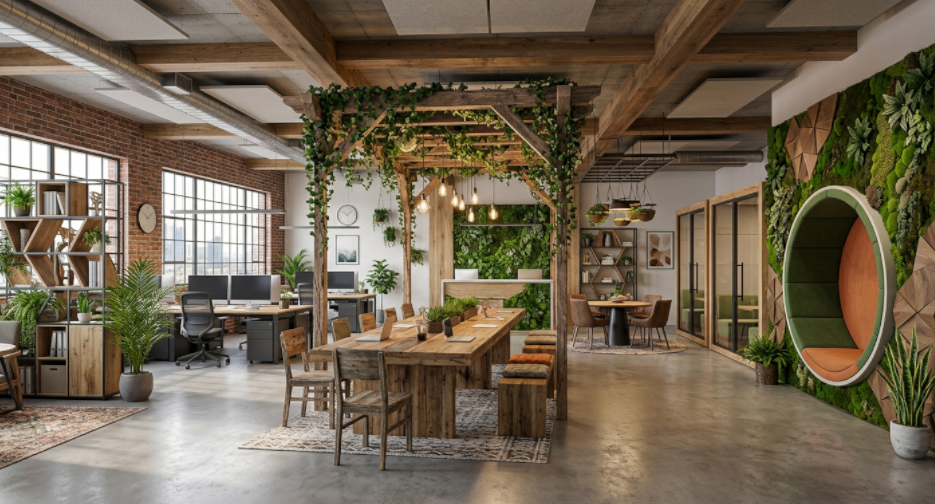
Examples include employee gathering areas, branded break rooms, collaboration spaces, internal recognition displays, and custom architectural features that make shared spaces more inviting.
The objective is not simply to make an office look impressive. It is to create an environment that reflects how an organization wants its people and visitors to experience the workplace.
Common Corporate Fabrication Applications
Corporate fabrication can be applied throughout an office, headquarters, campus, showroom, or customer-facing facility.
Reception Areas and Lobbies
Reception desks, branded backdrops, dimensional lettering, feature walls, decorative panels, and custom architectural structures can establish a strong visual identity at the entrance.
Corporate Offices and Headquarters
Custom millwork, conference room features, executive office elements, architectural screens, wall treatments, and specialty fixtures can help create a consistent design throughout a facility.
Collaboration and Gathering Spaces
Companies may use custom-built features to define shared workspaces, meeting areas, employee lounges, innovation centers, and multipurpose rooms.
Showrooms and Customer Experience Centers
Product displays, interactive structures, sculptural features, branded environments, and specialty presentation systems can help businesses showcase their products and services in a controlled, memorable setting.
Corporate Displays and Recognition Installations
Custom fabrication can create dimensional company histories, awards displays, product showcases, employee recognition features, and installations that communicate an organization’s accomplishments and values.
Materials and Fabrication Methods
Corporate projects often combine multiple materials and fabrication disciplines. The right approach depends on the design, location, intended use, durability requirements, finish, and installation conditions.
Common materials and processes include:
Metal fabrication: Steel and aluminum can be used for structural frames, architectural details, custom fixtures, dimensional elements, and specialty supports.
Carpentry and millwork: Wood and engineered wood products are frequently used for reception desks, cabinets, wall treatments, built-ins, conference room features, and custom furniture elements.
Fiberglass fabrication: Fiberglass can produce lightweight, durable sculptural forms, specialty shapes, custom enclosures, and components that require more complex contours.
Foam sculpting and CNC carving: Foam can be shaped into dimensional lettering, decorative elements, architectural details, large-scale sculptures, and custom forms that can be coated and finished for their intended application.
3D modeling and printing: Digital modeling helps develop complex shapes, visualize concepts, and prepare components for production. 3D printing can support prototypes, detailed features, and specialty parts.
Finishing and specialty coatings: Paint, textures, metallic finishes, simulated materials, and other surface treatments help bring fabricated components together into a cohesive design.
The strongest results often come from combining these methods rather than relying on a single material or process.
The Importance of Design, Engineering, and Coordination
A corporate fabrication project needs to work in the real world, not just look good in a rendering.
Before production begins, important considerations may include dimensions, attachment methods, weight, material selection, access to the installation area, electrical or lighting coordination, durability, and how individual components will fit together.
For larger architectural features or suspended elements, structural requirements and appropriate professional review are especially important. Building codes, fire performance, accessibility, and other site-specific requirements may also affect material selection and construction.
Early coordination between the client, designer, architect, general contractor, and fabricator can help identify potential challenges before they become costly changes.
Why Work With a Full-Service Fabrication Company?
Some corporate projects require only a single custom feature. Others involve multiple elements that combine metalwork, millwork, fiberglass, sculpting, finishing, and digital fabrication.
Working with a fabrication company that has multiple capabilities under one roof can simplify the process. It can also help maintain consistency between components that need to function and look like parts of the same environment.
At Statement Fabrication, we bring together custom fabrication, metal fabrication, carpentry and millwork, fiberglass, foam sculpting, 3D modeling, and advanced production capabilities to create custom elements for distinctive commercial and corporate environments.
Our team works to turn ambitious concepts into carefully built physical features, whether the project calls for a single architectural centerpiece or a collection of coordinated fabricated elements.
Building Better Corporate Environments
Corporate spaces are an opportunity to communicate what makes an organization different. The right fabricated features can reinforce brand identity, improve the visitor experience, support employees, and give a workplace a more distinctive architectural character.
Whether you are developing a new headquarters, renovating an existing office, creating a customer experience center, or adding a custom feature to a corporate environment, thoughtful fabrication can help bring the vision to life.
Statement Fabrication builds custom features and environments for businesses with ideas that deserve more than an off-the-shelf solution.
Contact Statement Fabrication to discuss your next corporate fabrication project.
Frequently Asked Questions
What is corporate fabrication?
Corporate fabrication involves designing and building custom physical features for offices, headquarters, showrooms, and branded business environments.
What can be custom fabricated for a corporate office?
Reception desks, feature walls, dimensional logos, architectural elements, displays, fixtures, and specialty installations can all be custom fabricated.
What materials are used in corporate fabrication?
Common materials include metal, wood, fiberglass, foam, plastics, and specialty finishes, selected according to the project.
Can custom fabrication incorporate company branding?
Yes. Logos, colors, messaging, visual themes, and brand-inspired shapes can be incorporated into custom fabricated features.
Does corporate fabrication include design and engineering?
The scope varies by project. Fabricators may work from supplied plans or collaborate on design development, modeling, detailing, and production planning.
Can custom fabricated features be added to an existing office?
Yes. Many projects involve adding new architectural features, branded installations, displays, or specialty fixtures to existing spaces.
Can one company fabricate multiple types of corporate features?
A multidisciplinary fabrication company can often combine metalwork, millwork, fiberglass, foam sculpting, and other processes within one project.
Does Statement Fabrication work on corporate projects?
Statement Fabrication provides custom fabrication capabilities for businesses seeking distinctive architectural features, branded environments, displays, and specialty builds.