


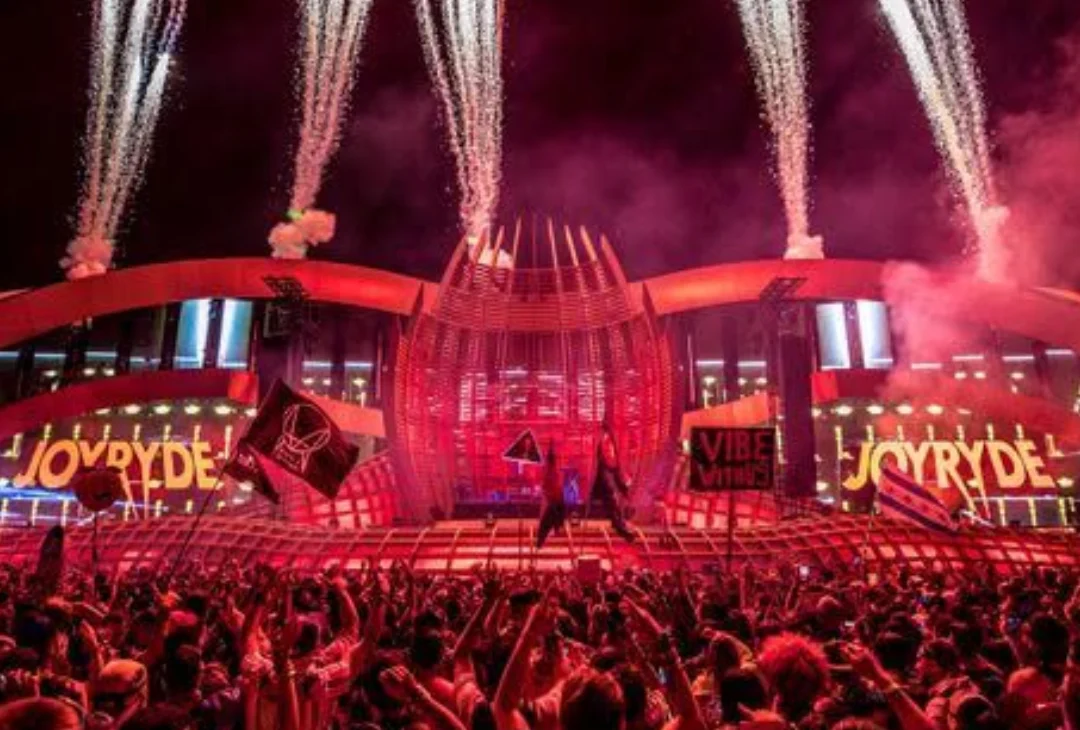
Concerts and music festivals are known for spectacular visuals, elaborate stage designs, and environments that give audiences something to remember. Behind many of these productions are custom-fabricated structures and scenic elements designed to bring an artist’s or event producer’s creative vision into the real world.
From massive stage features and oversized sculptures to specialty props, branded installations, and immersive festival environments, custom concert and festival fabrication makes it possible to build elements that standard staging and display products cannot provide.
Every production has its own identity, scale, and technical requirements. Some projects call for a single dramatic centerpiece, while others involve numerous fabricated components that work together as part of a much larger scenic environment.
Here are some of the possibilities custom fabrication can bring to concerts, festivals, and live entertainment productions.
1. Custom Main-Stage Scenic Features
The main stage is often the visual centerpiece of a concert or festival. Its appearance helps establish the identity of the production and creates the backdrop for the audience’s experience.
Custom-fabricated stage features can include:
- Sculptural backdrops and scenic walls
- Oversized dimensional shapes
- Custom stage facades
- Architectural frames and decorative structures
- Large branded or themed elements
- Specialty surrounds for video displays
- Custom columns, towers, and decorative features
- Three-dimensional logos and symbols
These elements can be fabricated in a variety of materials and finishes to achieve the scale, shape, and visual impact required by the design.
The scenic components may also need to coordinate with video screens, lighting fixtures, staging systems, rigging, and other production equipment. Early collaboration with the appropriate production teams helps identify dimensions, clearances, access, and integration requirements.
2. Oversized Props and Sculptural Installations
Large props and sculptures can become signature visual elements of a concert or festival.
They may represent an artist’s identity, support a production theme, create a recognizable event landmark, or simply provide a dramatic focal point.
Custom fabrication makes it possible to produce pieces such as:
- Oversized product replicas
- Giant characters and figures
- Abstract sculptures
- Themed objects and symbols
- Large dimensional logos
- Custom scenic creatures
- Decorative installations
- Specialty photo-opportunity pieces
Foam sculpting and CNC foam carving are particularly useful for producing large, detailed shapes. Fiberglass can provide a more durable finished surface when appropriate, while metalwork, carpentry, and 3D printing can support additional structural and decorative requirements.
3. Secondary Stages and Specialty Performance Areas
Large festivals often feature multiple stages and performance areas. Each space may have its own theme, audience, and visual identity.
Custom-fabricated elements can help create distinct environments throughout the venue.
Possible applications include:
- Stage backdrops and decorative facades
- Custom performance-area structures
- Sculptural focal points
- Themed architectural elements
- Specialty display features
- Decorative columns and portals
- Custom scenic surrounds
A secondary stage does not have to look like a smaller version of the main stage. Custom fabrication allows each performance area to have its own visual personality.
4. Themed Festival Environments
The festival experience often extends beyond the performance stage.
Event producers may want to create themed spaces, decorative walkways, branded areas, gathering spaces, or immersive installations throughout the venue.
Custom fabrication can support these environments with:
- Large decorative structures
- Themed entry features
- Custom arches and portals
- Sculptural installations
- Oversized props
- Branded environmental elements
- Decorative walls and partitions
- Specialty structures for designated event areas
These features can help connect different parts of the venue and give attendees additional reasons to explore the event.
5. Branded Activations and Sponsor Displays
Sponsors and event partners often need a physical presence that attracts attention and communicates their brand.
Rather than relying exclusively on standard banners and display systems, custom-fabricated installations can create more distinctive sponsor environments.
Examples include:
- Three-dimensional branded logos
- Custom product displays
- Oversized brand symbols
- Interactive display structures
- Product demonstration stations
- Branded photo backdrops
- Custom counters and presentation areas
- Specialty props and sculptures
The design should reflect the brand while considering how visitors will approach, interact with, and move through the installation.
6. Artist-Specific Scenic Elements
Concert productions may be designed around an artist’s identity, album, tour concept, or creative direction.
Custom fabrication can help translate those ideas into physical scenery.
This may involve:
- Artist logos and dimensional lettering
- Themed stage backdrops
- Sculptural representations of creative concepts
- Custom props and stage pieces
- Specialty display structures
- Decorative elements tied to a tour theme
- Unique scenic features for a particular performance
Each production has its own requirements, and the fabrication process should follow the creative direction and technical specifications established by the production team.
7. Custom Metal Structures and Fabricated Components
Metal fabrication can play an important role in scenic production. Depending on the design, metal components may provide support, connection points, decorative details, or specialty shapes.
Custom metalwork can include:
- Steel and aluminum frames
- Brackets and mounting components
- Decorative metal panels
- Custom supports and assemblies
- Specialty platforms and fixtures
- Dimensional metal features
- Custom-fabricated scenic components
Structural applications must be designed and reviewed appropriately for their intended use. A scenic fabricator should coordinate with qualified engineers and production specialists when the project requires structural calculations, rigging review, or other approvals.
8. Foam Sculpting and CNC Foam Carving
Foam is a versatile material for creating large scenic shapes and detailed props without the weight of some alternative construction methods.
With digital modeling and CNC foam carving, fabricators can produce complex forms, repeated shapes, and detailed sculptural elements.
Applications include:
- Large-scale sculptures
- Custom characters and figures
- Themed props
- Dimensional lettering
- Decorative architectural details
- Oversized replicas
- Custom shapes for scenic environments
Foam components can be finished in different ways depending on their appearance, durability, handling, and intended use. Coatings, hard coats, fiberglass skins, and specialty paint finishes may be considered based on the project.
9. Fiberglass Fabrication and Specialty Finishes
Fiberglass is useful for custom scenic elements that require shaped surfaces and a more durable finished exterior than an unfinished foam form.
It can be used for:
- Sculptural pieces
- Custom props
- Specialty enclosures
- Decorative panels
- Themed scenic features
- Complex shapes and forms
Fiberglass fabrication can also be combined with foam sculpting, metal supports, and other processes to produce more complicated pieces.
The appropriate finish depends on the intended environment, handling requirements, and expected service life.
10. 3D Modeling, Prototyping, and 3D Printing
Some scenic designs include shapes or details that are difficult to visualize or fabricate using traditional methods alone.
Three-dimensional modeling can help teams evaluate a concept before production. Prototyping can also help confirm dimensions, fit, proportions, and design details.
Large-format 3D printing and smaller detailed prints may be used for:
- Custom shapes and components
- Sculptural details
- Specialty props
- Prototype parts
- Dimensional logos
- Complex decorative elements
- Components that integrate with larger fabricated structures
These technologies are especially useful when a project requires unusual geometry or a combination of digitally designed and traditionally fabricated components.
11. Combining Multiple Fabrication Disciplines
Many of the most ambitious live-event projects require more than one fabrication process.
A large scenic feature might combine a metal support structure, custom carpentry, CNC-carved foam, fiberglass surfaces, 3D-printed details, and specialty paint finishes.
Bringing these disciplines together requires coordination throughout design and production. Components must fit together, finishes should be consistent, and the completed pieces need to meet the project’s handling and use requirements.
A fabrication partner with access to multiple capabilities can help coordinate this work and reduce the number of separate production relationships required.
Planning for Transportation, Installation, and Reuse
Custom scenic elements must be designed for more than their appearance in a rendering or fabrication shop.
Before production begins, event teams should consider how each piece will be transported, handled, assembled, and used at the venue.
Important questions include:
- Will the pieces travel to multiple event locations?
- Do components need to fit within specific shipping dimensions?
- Will they be assembled on-site?
- Are there venue access or loading restrictions?
- Will the pieces be exposed to outdoor conditions?
- Do they need to be stored and reused?
- What installation, rigging, or engineering services are required?
These factors can influence the design, material selection, construction methods, and overall project cost.
Delivery, installation, assembly, and on-site production support should be clearly defined in the project agreement. They are not automatically included in every fabrication scope.
Custom Concert & Festival Fabrication at Statement Fabrication
Statement Fabrication is a Las Vegas-based custom fabrication company with experience supporting major live entertainment and scenic production projects.
Our work has included scenic fabrication for multiple EDC productions, as well as projects associated with A$AP Rocky, Mariah Carey, MTV, and others.
Our role on these productions has included creating primary scenic features and the structures that support the visual elements of the stage and environment. The exact scope varies with each production and its requirements.
Our shop brings together a wide range of capabilities, including:
- Metal fabrication and welding
- Carpentry and custom millwork
- Fiberglass fabrication
- Foam sculpting and CNC foam carving
- 3D modeling and design
- Large-format 3D printing
- CNC cutting and specialty fabrication
- Custom finishing and paint work
This combination gives our team the flexibility to approach projects that require multiple materials, processes, and specialized construction methods.
We enjoy working with creative directors, production designers, event producers, and entertainment companies that need a fabrication partner capable of taking on unusual and ambitious builds.
Frequently Asked Questions About Custom Concert & Festival Fabrication
Can you fabricate custom concert stage scenery?
Yes. Custom scenic features can include stage facades, backdrops, dimensional structures, sculptures, and decorative elements.
Can you build large festival props and sculptures?
Yes. Large props can be produced using foam carving, fiberglass, metalwork, carpentry, 3D printing, and other fabrication methods.
Can scenic elements be built for outdoor festivals?
Yes, but materials, finishes, stability, anchoring, and environmental conditions should be considered during planning.
Can you fabricate features for an existing stage design?
Fabricators can often work from supplied drawings, renderings, and specifications to produce custom scenic components.
What is the advantage of CNC foam carving?
It allows fabricators to produce detailed, complex, and repeatable shapes from digital models.
Can you combine foam, fiberglass, metal, and wood?
Yes. Many custom scenic projects combine several materials and fabrication processes.
Can scenic pieces be designed for touring productions?
Yes. Transportation, modular construction, assembly, storage, and repeated handling can be considered during design.
Does scenic fabrication include rigging and installation?
Not automatically. Engineering, rigging, transportation, installation, and assembly should be defined separately in the project scope.
Have an Ambitious Production in Mind?
A memorable concert or festival environment often starts with an idea that doesn’t fit into a standard product catalog. Custom fabrication helps turn those ideas into physical structures, scenic features, props, and installations.
If you’re developing a stage design, festival environment, artist production, or branded activation, Statement Fabrication would like to hear about it.
Bring us your renderings, drawings, reference images, or early concepts. Let’s explore how our team can help bring your next production to life.
Statement Fabrication — We Build Statements.