


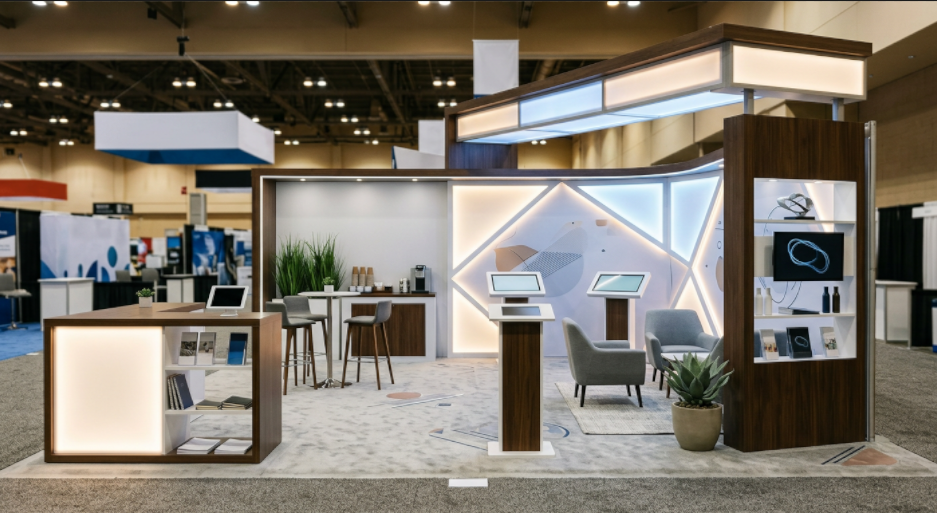
Trade shows give businesses an opportunity to put their products, services, and brands directly in front of potential customers. In a crowded exhibition hall, however, getting noticed takes more than a logo and a few display panels. A successful exhibit needs thoughtful design, purposeful construction, and carefully fabricated elements that bring a brand’s message to life.
Trade show fabrication is the process of designing, engineering, and building the physical components used in trade show booths, branded displays, product presentations, and custom exhibit environments. These elements can range from simple display structures to elaborate, multi-level environments with architectural features, interactive components, custom finishes, and integrated technology.
Understanding how trade show fabrication works can help businesses, exhibit designers, and event professionals make better decisions when planning their next exhibit.
What Is Trade Show Fabrication?
Trade show fabrication involves producing custom physical structures and display elements for exhibitions, conventions, expos, and other industry events.
Unlike a standard display system assembled from off-the-shelf components, custom fabrication allows an exhibit to be built around a company’s specific brand, products, space, and objectives.
A custom exhibit may include:
- Branded walls, partitions, and architectural features
- Product display platforms and presentation structures
- Reception counters and demonstration stations
- Three-dimensional logos and dimensional signage
- Custom shelving, cabinetry, and millwork
- Sculptural elements and oversized props
- Interactive displays and specialty structures
- Lighting features and technology integration points
The goal is to create an environment that attracts attention, communicates a message, and supports the way a company wants visitors to experience its brand.
Why Custom Fabrication Matters at Trade Shows
Trade shows are competitive environments. Exhibitors often have only a limited amount of time and space to make an impression on attendees.
A thoughtfully fabricated exhibit can help a company stand apart from neighboring booths while creating a more memorable experience for visitors.
Creating a Distinct Brand Presence
A custom exhibit can reflect a company’s identity through its shapes, materials, colors, textures, graphics, and architectural details. Rather than relying on a generic booth configuration, businesses can create an environment that feels consistent with their brand.
Highlighting Products and Services
Products often need more than a table or shelf to be presented effectively. Custom platforms, display cases, product pedestals, demonstration stations, and integrated structures can help make products the focal point of an exhibit.
Making Better Use of Available Space
Exhibit space is limited and often comes with specific dimensions and restrictions. Custom fabrication allows display elements to be designed around the available footprint, visitor flow, product requirements, and intended use of the space.
Supporting Visitor Interaction
Some exhibits are designed primarily for visual impact, while others encourage visitors to interact with products, demonstrations, or digital experiences. Custom structures can accommodate these different objectives.
Common Types of Trade Show Exhibits
Trade show exhibits vary considerably depending on the company, event, budget, and available floor space.
Inline Booths
Inline booths are typically arranged in a straight row alongside neighboring exhibitors. They often have a relatively narrow footprint, making efficient use of vertical space, branded backwalls, counters, and product displays especially important.
Island Exhibits
Island exhibits are accessible from multiple sides and can offer more freedom in layout and visitor movement. They may incorporate large architectural structures, overhead features, product demonstrations, meeting areas, and multiple branded focal points.
Peninsula Exhibits
Peninsula booths are generally open on three sides and connect to neighboring exhibits along one side. Their layouts often require careful planning to balance visibility, access, and the use of available space.
Custom Display Environments
Some exhibitors require more than a traditional booth. Product launches, experiential activations, and specialty exhibitions may call for fully customized environments designed around a specific theme, product, or visitor experience.
Materials Used in Trade Show Fabrication
The materials used in an exhibit depend on its design, intended lifespan, appearance, structural requirements, transportation needs, and budget.
Common materials include:
- Wood and plywood: Used for walls, counters, cabinetry, platforms, and custom millwork.
- Metals: Steel and aluminum can provide structural support, framing, brackets, decorative details, and specialty components.
- Foam: Sculpted foam can create dimensional signage, props, themed elements, and lightweight decorative features.
- Fiberglass: Useful for custom shapes, sculptural features, specialty enclosures, and durable finished surfaces.
- Plastics and acrylics: Often used for display components, transparent features, protective covers, and specialty details.
- Printed graphics and laminates: Help communicate brand messaging and create finished visual surfaces.
Many custom exhibits combine several materials and fabrication methods to achieve the desired appearance and performance.
Technology and Modern Exhibit Fabrication
Modern trade show fabrication increasingly combines traditional craftsmanship with digital design and advanced manufacturing technology.
Three-dimensional modeling allows designers and fabricators to evaluate proportions, layouts, clearances, and component relationships before construction begins. It can also help teams coordinate complex shapes and identify potential challenges earlier in the process.
Digital fabrication methods can support the production of detailed and repeatable components.
Examples include:
- CNC routing and cutting
- Laser cutting of suitable materials
- Large-format 3D printing
- Robotic and CNC foam carving
- Digital modeling and prototyping
- Precision metal fabrication
These technologies can help turn complicated concepts into physical components while supporting accuracy, consistency, and efficient production.
Important Considerations When Planning a Trade Show Exhibit
A successful exhibit requires more than an attractive design. Practical considerations should be addressed before fabrication begins.
Booth Dimensions and Venue Requirements
Every exhibition has rules governing booth dimensions, height restrictions, sightlines, access, materials, and other requirements. Exhibitors should review the event’s official exhibitor guidelines before finalizing a design.
Transportation and Assembly
An exhibit may need to travel between cities, venues, or multiple events. Components should be designed with transportation, handling, storage, and assembly requirements in mind.
Durability and Reusability
Some exhibits are built for a single event, while others are intended to be reused across multiple shows. The expected lifespan can influence material selection, construction methods, finishes, and how components connect.
Lighting and Technology
Screens, lighting, interactive displays, and electrical equipment should be considered during the design and fabrication process rather than treated as last-minute additions.
Safety and Accessibility
Exhibits should be planned with appropriate stability, safe visitor circulation, accessible features, and applicable venue requirements in mind. Certain structures or installations may require professional engineering, approvals, or specialized review.
Choosing a Trade Show Fabrication Partner
The company building an exhibit can have a major impact on the final result. A strong fabrication partner should understand how to translate a concept into a physical structure while balancing appearance, function, materials, production requirements, and project constraints.
When evaluating fabricators, consider:
- Experience with custom trade show exhibits
- The range of fabrication capabilities available
- Access to design, modeling, and engineering support
- Experience working with different materials
- Quality of craftsmanship and finishing
- Ability to manage complex or unusual components
- Communication and project coordination
- Experience with transportation and installation requirements, when needed
It is also helpful to review examples of completed projects and ask how the fabricator approaches challenges similar to those involved in your exhibit.
Trade Show Fabrication at Statement Fabrication
Statement Fabrication is a full-service custom fabrication shop in Las Vegas, Nevada, producing specialized structures, displays, scenic elements, and custom environments for a wide range of industries.
Our capabilities bring multiple fabrication disciplines together under one roof. Depending on project requirements, our work can include metal fabrication, carpentry and millwork, fiberglass fabrication, custom foam sculpting, CNC cutting, 3D modeling, and large-format 3D printing.
This combination allows us to approach projects that require more than a standard display system. From individual exhibit components to larger custom environments, our team works to turn ambitious concepts into carefully constructed physical pieces.
Whether you have completed drawings, a design concept, or simply an idea that needs to be developed, Statement Fabrication can help explore the possibilities.
Frequently Asked Questions About Trade Show Fabrication
What is custom trade show fabrication?
It is the design and construction of specialized booths, displays, structures, and branded features for exhibitions and trade shows.
What can a trade show fabricator build?
Fabricators can produce booth structures, counters, product displays, signage, dimensional logos, props, and custom exhibit environments.
What materials are used for trade show booths?
Common materials include wood, metal, aluminum, foam, fiberglass, acrylic, plastics, and printed finishes.
What is the difference between a rental booth and a custom exhibit?
Rental booths use standardized components, while custom exhibits are built around a company’s specific brand, products, and design requirements.
Can custom exhibits be reused?
Yes. Exhibits can be designed for repeated use, with construction methods and materials selected to support transportation, storage, and reassembly.
Does trade show fabrication include installation?
Installation, delivery, and assembly depend on the project scope, venue requirements, and agreed-upon services.
How early should we contact a trade show fabricator?
As early as possible. Early coordination allows more time for design development, approvals, fabrication, logistics, and event deadlines.
Can a fabricator work from our existing designs?
Many fabricators can work from supplied drawings, renderings, or specifications and help identify the information needed before production.
Bring Your Next Trade Show Exhibit to Life
A trade show exhibit is an opportunity to make a lasting impression. The right combination of design, materials, technology, and craftsmanship can transform an ordinary booth space into a memorable brand environment.
If you’re planning a custom exhibit, product display, or trade show environment, contact Statement Fabrication. Bring us your drawings, renderings, or initial ideas, and let’s talk about what we can build.
Statement Fabrication — We Build Statements.