


Making a Lasting Impression on the Trade Show Floor
Trade shows give businesses an opportunity to introduce products, connect with customers, build relationships, and strengthen brand recognition. But with dozens or even hundreds of exhibitors competing for attention, standing out requires more than a logo and a few display panels.
Custom trade show exhibit fabrication transforms a brand’s vision into a physical experience. Through creative design, precision manufacturing, and carefully selected materials, companies can create distinctive exhibits that communicate their identity, showcase their offerings, and encourage meaningful interactions with visitors.
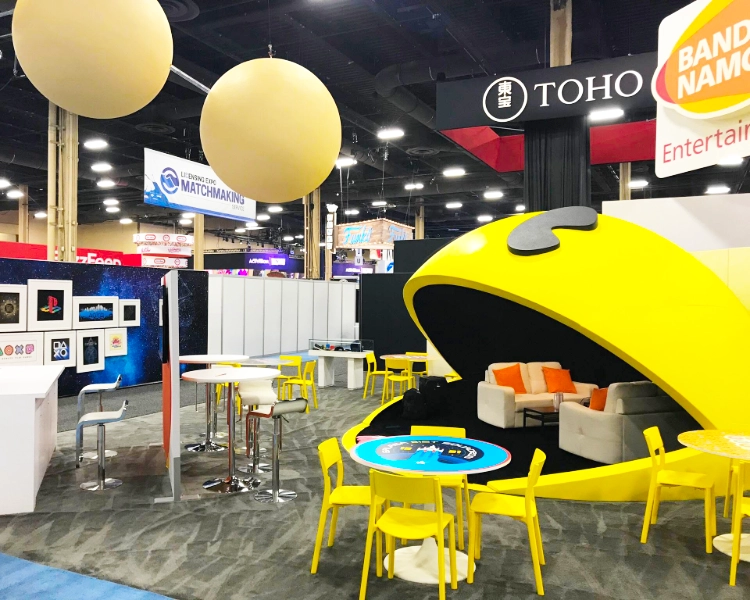
At Statement Fabrication, we specialize in custom fabrication that brings ambitious concepts to life. From architectural display elements and oversized product replicas to dimensional signage and immersive brand installations, our team helps turn creative ideas into physical exhibits built to make an impression.
What Is Custom Trade Show Exhibit Fabrication?
Custom trade show exhibit fabrication is the process of designing, engineering, and manufacturing physical structures and display components specifically for a brand, product, or event.
Unlike standard rental booths or modular display systems, custom-fabricated exhibits can be developed around a company’s unique goals, visual identity, spatial requirements, and desired visitor experience.
Depending on the project, fabrication may include:
- Custom exhibit structures: Unique booth layouts, architectural features, branded walls, and overhead elements.
- Dimensional branding: Three-dimensional logos, lettering, product displays, and sculptural brand elements.
- Product replicas and displays: Oversized models, interactive product showcases, and specialty presentation pieces.
- Experiential features: Photo opportunities, interactive installations, and engaging physical elements that encourage visitors to participate.
- Specialty finishes: Painted surfaces, textured materials, fiberglass components, metalwork, custom millwork, and sculpted foam.
Each component can be engineered and fabricated to work within the exhibit’s design, venue requirements, and installation plan.
Why Invest in a Custom-Fabricated Trade Show Exhibit?
A trade show exhibit is more than a place to stand and distribute marketing materials. It is a physical representation of your brand, and its design can influence how visitors perceive your company.
1. Stand Out in a Competitive Environment
When neighboring booths use similar layouts and off-the-shelf display systems, distinctive shapes, dimensional elements, bold structures, and creative material combinations can help your exhibit capture attention.
Custom fabrication allows brands to move beyond standard configurations and create a display that reflects what makes them different.
2. Bring Your Brand Identity to Life
Brand guidelines often include visual elements that are difficult to reproduce with conventional display products. Custom fabrication gives designers greater flexibility to incorporate unique forms, signature finishes, oversized logos, and architectural details into a cohesive physical presentation.
3. Showcase Products in More Engaging Ways
Some products are too small, complex, or technically detailed to communicate their value through photographs alone. Custom displays, enlarged replicas, cutaway models, and purpose-built demonstration structures can help visitors better understand what a product does and why it matters.
4. Encourage Visitor Interaction
A well-planned exhibit can give attendees reasons to stop, explore, ask questions, and interact with your team. Fabricated demonstration stations, product experiences, photo installations, and interactive features can help turn passive viewing into active engagement.
5. Support Repeated Use Across Events
Depending on the design, materials, construction methods, and transportation requirements, a custom exhibit may be engineered for use at multiple trade shows. Planning for durability, disassembly, storage, and reassembly early in the process can help extend the usefulness of the investment.
From Concept to Show Floor: How Custom Exhibit Fabrication Works
Successful trade show exhibits require coordination between creative vision and practical execution. The earlier fabrication considerations enter the process, the easier it is to address potential challenges before production begins.
A typical custom exhibit fabrication project includes these stages:
- Project discovery: Establish the event objectives, target audience, brand requirements, booth dimensions, budget, and schedule.
- Design and engineering: Develop the concept into buildable components, considering structural requirements, materials, dimensions, transportation, and installation.
- Material selection: Determine which materials and fabrication methods best support the desired appearance, performance, durability, and budget.
- Fabrication and finishing: Manufacture the components using appropriate processes such as CNC cutting, carpentry, metal fabrication, 3D printing, foam sculpting, fiberglass fabrication, and specialty finishing.
- Quality review and preparation: Check components against project specifications and prepare them for transport and installation.
- Installation planning: Coordinate packaging, delivery, assembly requirements, and venue logistics according to the project’s scope and show schedule.
The exact process varies with the exhibit’s size, complexity, and requirements. Projects involving oversized structures, intricate finishes, or interactive elements may require additional engineering, prototyping, and coordination.
Materials and Fabrication Techniques That Expand What’s Possible
One of the advantages of working with a custom exhibit fabricator is the ability to combine different materials and production techniques within one cohesive project.
- Wood and millwork create architectural features, counters, cabinetry, and detailed branded structures.
- Metal fabrication supports frames, structural components, specialty forms, and durable display elements.
- CNC machining produces accurately cut components, dimensional shapes, and repeatable parts.
- 3D printing supports prototypes, intricate details, specialty components, and complex geometries.
- Foam sculpting and CNC foam carving make it possible to create lightweight dimensional forms, props, and oversized product replicas.
- Fiberglass fabrication and finishing support sculptural forms and specialty components requiring a shaped, finished surface.
The right approach depends on the design, intended use, finish requirements, weight constraints, and budget. Combining multiple capabilities can also reduce the compromises between visual impact and practical construction.
What to Consider Before Starting a Trade Show Exhibit Project
Getting the right fabrication partner involved early can help prevent costly revisions and schedule challenges.
Before beginning, consider the following:
- Event objectives: Are you launching a product, generating leads, demonstrating technology, or building brand awareness?
- Booth specifications: What are the footprint, height restrictions, access limitations, and venue requirements?
- Brand experience: What should attendees notice, understand, and remember?
- Budget and schedule: How much time is available for design, engineering, fabrication, finishing, and logistics?
- Transportation and reuse: Will the exhibit travel between events, and does it need to break down into manageable components?
- Installation requirements: Who will handle delivery, assembly, and on-site coordination?
Clear answers help align the creative concept with the practical realities of production and event execution.
Custom Trade Show Exhibit Fabrication by Statement Fabrication
Statement Fabrication is a Las Vegas, Nevada-based custom fabrication company specializing in complex, visually distinctive projects for brands, events, exhibits, and commercial environments.
Our capabilities span 3D modeling and printing, metal fabrication, carpentry and millwork, fiberglass fabrication, and custom foam sculpting. Bringing these disciplines together allows our team to approach projects with a broad range of materials, manufacturing methods, and creative possibilities.
Whether a project calls for a distinctive branded structure, dimensional product display, sculptural centerpiece, or collection of custom-fabricated exhibit components, we work to translate the concept into a finished physical product.
For brands, exhibit designers, agencies, and event teams pursuing something beyond a standard booth, custom fabrication opens the door to more distinctive and memorable solutions.
Have a trade show exhibit concept in mind? Contact Statement Fabrication to discuss your project, production requirements, and how our fabrication capabilities can help bring your vision to life.
Frequently Asked Questions About Custom Trade Show Exhibit Fabrication
What is the difference between a custom trade show exhibit and a standard booth?
A standard booth typically uses preconfigured display components, while a custom exhibit is fabricated around specific branding, design, spatial, and functional requirements.
What can a custom trade show exhibit fabricator build?
Fabricators can produce booth structures, branded walls, dimensional logos, product replicas, display counters, sculptural elements, specialty finishes, and interactive physical installations.
What materials are used in custom trade show exhibits?
Common materials include wood, metal, foam, fiberglass, acrylic, plastics, and printed components. The selection depends on design, durability, weight, finish, and budget.
How early should we contact an exhibit fabricator?
Contact a fabricator as early as possible, ideally during concept development. Complex exhibits may require significant time for engineering, prototyping, production, finishing, and logistics.
Can custom trade show exhibits be reused?
Yes. Many exhibits can be designed for repeated use through durable materials, modular construction, and planned disassembly. Reusability depends on the design and event requirements.
Can a fabricator work from an existing exhibit design?
Many fabricators can work from supplied drawings, renderings, CAD files, or approved concepts. Engineering review may be needed to confirm buildability and production requirements.
Can custom fabrication accommodate oversized product replicas and sculptures?
Yes. Techniques such as CNC foam carving, fiberglass fabrication, 3D printing, and specialty finishing can produce large dimensional displays, subject to structural, transportation, and venue constraints.
Does Statement Fabrication handle trade show exhibit installation?
Installation, delivery, and assembly requirements depend on the project scope. Discuss these needs with Statement Fabrication early so the appropriate logistics and responsibilities can be established.
Create an Exhibit That Makes a Statement
The right trade show exhibit does more than fill a booth space. It gives your brand a physical presence, makes complex ideas tangible, and creates opportunities for meaningful connections.
With thoughtful planning and the right fabrication capabilities, even ambitious concepts can become practical, show-ready installations.
Statement Fabrication helps turn creative exhibit concepts into custom-built realities. Contact our team to discuss your next trade show project.